
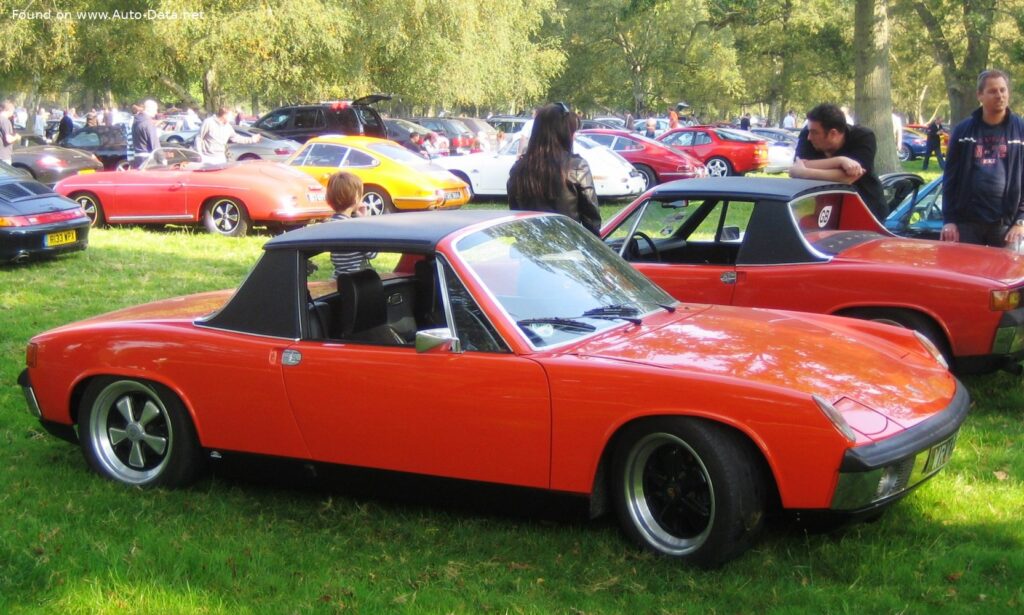
The VW-Porsche 914 2.0, producing 100 horsepower, was a mid-engined sports car manufactured between 1973 and 1976. It represented a significant step up in performance from the earlier 1.7L models and occupied a middle ground within the 914 range, positioned above the base 1.7L but below the more potent 914 2.0S. Developed as a collaborative effort between Volkswagen and Porsche, the 914 aimed to fill a gap in the market for an affordable, sporty roadster. It was built on the Volkswagen Type 4 platform, and shared many components with the Porsche 911, though at a lower price point. The 2.0-liter variant was a popular choice, offering a balance of performance and cost-effectiveness.
The 914 2.0: Positioning and Market Context
The 914 2.0 was intended to be the sweet spot in the 914 lineup. The base 1.7L model, while affordable, was often criticized for its lack of power, particularly in North America. The 2.0S, while offering significantly more performance, carried a higher price tag that put it out of reach for many buyers. The 2.0 model, with its 100 hp output, provided a noticeable improvement over the 1.7L without the premium cost of the ‘S’ version. It appealed to enthusiasts seeking a genuinely sporty driving experience without breaking the bank. The 914, in general, was marketed towards a younger demographic and those looking for a fun, engaging sports car that differed from the more traditional Porsche offerings.
Comparison with Other 914 Variants
Compared to the 1.7L, the 2.0 offered a substantial increase in torque and horsepower, resulting in quicker acceleration and improved highway cruising ability. The 1.7L’s 80 hp felt underpowered in many situations, while the 2.0’s 100 hp provided a more confident and enjoyable driving experience. The 2.0S, with its 130 hp and higher compression ratio, was a different beast altogether. It featured a more refined engine, improved suspension components, and often came with additional features as standard. While the 2.0S offered superior performance, the 2.0 provided a more accessible entry point into the 914 world. Maintenance costs were generally similar between the 2.0 and 2.0S, but the 1.7L benefitted from its simpler engine design, potentially leading to lower repair bills.
Powertrain & Engine Architecture
The heart of the 914 2.0 was the Type 914/6 engine, a 1971cc, air-cooled, horizontally opposed (boxer) four-cylinder engine. This engine, designated as the 039 code, was a direct descendant of the Volkswagen Type 4 engine, but with significant Porsche engineering input. It featured a bore of 94mm and a stroke of 71mm, resulting in a compression ratio of 8:1. The engine utilized Bosch mechanical multi-port fuel injection, a significant upgrade over the carburetors found on earlier models. This system improved fuel efficiency and provided more consistent performance. The valvetrain consisted of two valves per cylinder, operated by pushrods and rocker arms. The engine was mounted longitudinally in the chassis, ahead of the rear axle, contributing to the car’s excellent balance. The 914 2.0 was exclusively offered with a 5-speed manual transmission, providing precise gear changes and enhancing the driving experience.
Driving Characteristics
The 914 2.0 offered a unique driving experience thanks to its mid-engine layout and relatively lightweight construction. The car felt nimble and responsive, with excellent handling characteristics. The 100 hp engine provided adequate power for spirited driving, although it wasn’t a particularly fast car by modern standards. Acceleration from 0 to 60 mph took around 10 seconds, and the top speed was approximately 118 mph. The 5-speed manual transmission allowed drivers to keep the engine in its sweet spot, maximizing performance. The gear ratios were well-chosen, providing good acceleration in each gear. While the engine lacked the outright punch of the 2.0S, it delivered a smooth and linear power delivery, making it easy to drive in a variety of conditions. The mid-engine layout contributed to neutral handling, with minimal understeer or oversteer.
Equipment & Trim Levels
The 914 2.0 was relatively sparsely equipped compared to more luxurious sports cars of the era. Standard features included front and rear disc brakes, a four-wheel independent suspension, and comfortable bucket seats. Interior upholstery was typically vinyl, although leather was available as an option. The dashboard was functional and straightforward, with a speedometer, tachometer, and fuel gauge. Optional extras included a sunroof, upgraded stereo system, and various cosmetic enhancements. The 914 2.0 did not have distinct trim levels in the traditional sense; options were generally added individually. However, certain packages were available that bundled together popular features. The overall interior design prioritized functionality and driver engagement over luxury.
Chassis & Braking
The 914’s chassis was a monocoque construction, providing a rigid and lightweight platform. The front suspension utilized a spring strut and wishbone design, while the rear suspension employed trailing arms and coil springs. This setup provided a comfortable ride and excellent handling. The 914 2.0 featured ventilated disc brakes on all four wheels, providing ample stopping power. The braking system was hydraulically assisted, offering a firm and progressive pedal feel. The car’s relatively low weight contributed to its excellent braking performance. The steering was a rack and pinion system, providing precise and responsive steering feel. Wheel rims were typically 5.5J x 15 inches, fitted with 185/60R15 tires.
Market Reception & Comparison
The 914 2.0 was generally well-received by automotive critics. It was praised for its handling, balance, and affordability. However, some critics noted its relatively modest performance and spartan interior. Compared to other sports cars of the era, such as the MG B and the Triumph TR6, the 914 2.0 offered a more sophisticated driving experience and superior build quality. Fuel economy was respectable for a sports car of the 1970s, averaging around 30.2 US mpg. Reliability was generally good, although the air-cooled engine required regular maintenance. The 914 2.0 proved to be a popular choice among enthusiasts, and it remains a sought-after classic car today.
Technical Specifications
| Engine Type | Air-cooled, horizontally opposed four-cylinder |
| Engine Code | 039 |
| Displacement | 1971 cc (120.28 cu in) |
| Bore x Stroke | 94 mm x 71 mm (3.7 in x 2.8 in) |
| Compression Ratio | 8:1 |
| Fuel Injection | Bosch Mechanical Multi-Port |
| Maximum Power | 100 hp @ 5000 rpm |
| Maximum Torque | 157 Nm @ 3500 rpm (115.8 lb-ft @ 3500 rpm) |
| Transmission | 5-speed manual |
| Drive Wheels | Rear |
| Kerb Weight | 950 kg (2094.39 lbs) |
| Maximum Weight | 1220 kg (2689.64 lbs) |
| Fuel Tank Capacity | 62 l (16.38 US gal, 13.64 UK gal) |
| Length | 3985 mm (156.89 in) |
| Width | 1650 mm (64.96 in) |
| Height | 1230 mm (48.43 in) |
| Wheelbase | 2450 mm (96.46 in) |
| 0-60 mph | 10.0 sec (calculated) |
| Top Speed | 190 km/h (118.06 mph) |
Legacy
The VW-Porsche 914 2.0 has earned a devoted following among classic car enthusiasts. Its unique mid-engine layout, engaging driving dynamics, and relatively affordable price have made it a popular choice for restoration and modification. The Type 914/6 engine, while not the most powerful, is known for its durability and relatively simple maintenance requirements. Parts availability is generally good, although some specific components can be difficult to find. Today, well-maintained 914 2.0 models command a respectable price in the used car market, reflecting their growing popularity and historical significance. The 914, as a whole, represents a fascinating chapter in automotive history, showcasing the successful collaboration between two iconic brands and offering a unique alternative to the more conventional sports cars of its time.
