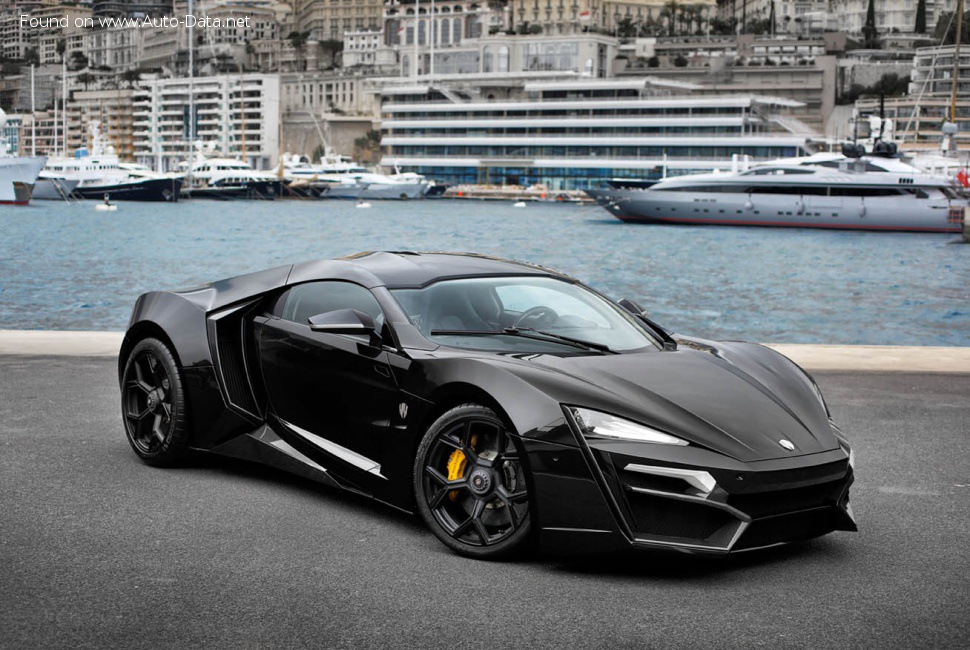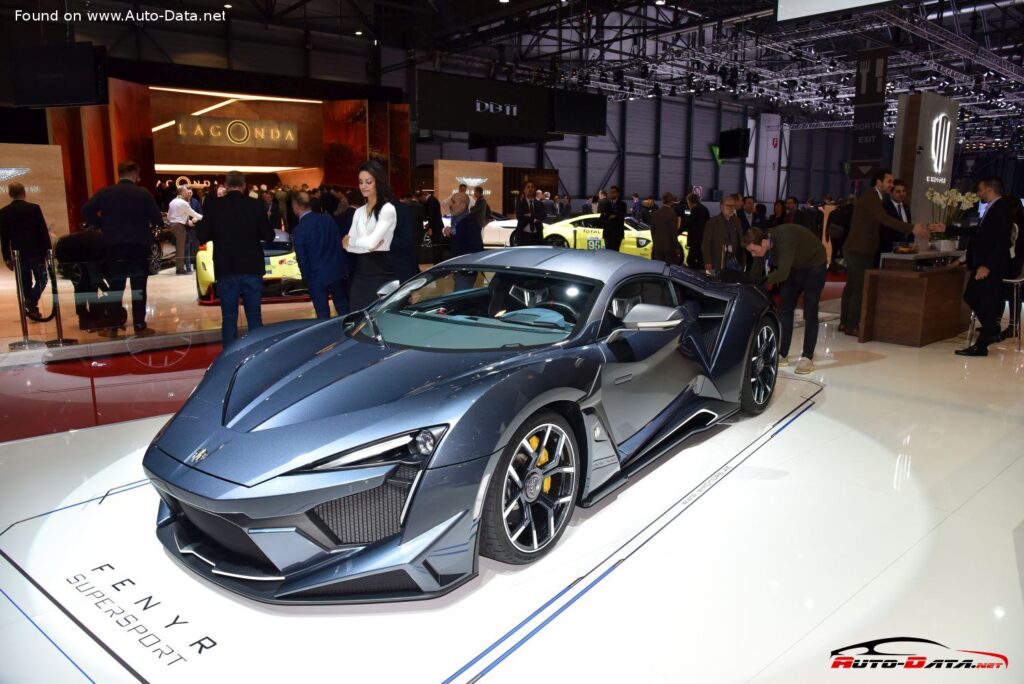
The W Motors Fenyr SuperSport is a high-performance sports car produced by the Lebanese automotive manufacturer, W Motors. Unveiled at the 2015 Dubai International Motor Show, the Fenyr SuperSport represents a significant step for W Motors, following their initial offering, the Lykan HyperSport. While the Lykan HyperSport gained notoriety for its extravagant features and limited production run, the Fenyr SuperSport was designed to be a more accessible, yet still exceptionally capable, supercar aimed at a broader (though still exclusive) clientele. The vehicle is primarily targeted towards markets with a demand for ultra-high-performance vehicles, including the Middle East, Europe, and select regions in Asia. It distinguishes itself through a potent powertrain, advanced materials, and a focus on driving dynamics.
W Motors Fenyr SuperSport: A Technical Overview
The Fenyr SuperSport is positioned within the supercar segment, competing with established manufacturers like Ferrari, Lamborghini, and McLaren. It aims to deliver a thrilling driving experience through a combination of raw power, lightweight construction, and sophisticated engineering. Unlike many contemporary supercars embracing hybridization, the Fenyr SuperSport relies on a traditional internal combustion engine, albeit one heavily modified for extreme performance. The car’s design philosophy centers around aerodynamic efficiency and a driver-focused experience.
Engine & Performance
At the heart of the Fenyr SuperSport lies a twin-turbocharged 4.0-liter boxer six-cylinder engine. This engine, sourced from Porsche but extensively reworked by W Motors, produces a staggering 900 horsepower at 7,100 rpm and 1,100 Nm (811.32 lb.-ft.) of torque at 4,000 rpm. The power-to-weight ratio stands at an impressive 1.4 kg/Hp, or 692.3 Hp/tonne, contributing to its blistering acceleration. The engine utilizes direct fuel injection and an intercooler to maximize efficiency and power output. Power is delivered to the rear wheels via a 7-speed PDK (Porsche Doppelkupplung) automatic transmission, known for its rapid and precise gear changes. The engine’s configuration, a boxer layout, contributes to a lower center of gravity, enhancing handling characteristics. Fuel consumption is rated at 13.5 l/100 km (17.4 US mpg, 20.9 UK mpg, 7.4 km/l) on a combined cycle, with urban and extra-urban figures of 20 l/100 km (11.8 US mpg, 14.1 UK mpg, 5 km/l) and 9.9 l/100 km (23.8 US mpg, 28.5 UK mpg, 10.1 km/l) respectively. CO2 emissions are rated at 311 g/km.
Design & Features
The Fenyr SuperSport boasts a striking coupe body style with two doors and seating for two occupants. Its exterior design is characterized by aggressive lines, a low-slung profile, and prominent aerodynamic elements. The body is constructed from a combination of carbon fiber and aluminum, contributing to its relatively low kerb weight of 1,300 kg (2,866.01 lbs.). The car’s dimensions are 4,684 mm (184.41 in.) in length, 1,983 mm (78.07 in.) in width, and 1,199 mm (47.2 in.) in height, with a wheelbase of 2,625 mm (103.35 in.). The front and rear tracks measure 1,667 mm (65.63 in.) and 1,720 mm (67.72 in.) respectively.
The chassis features independent suspension systems at both the front (McPherson strut) and rear (multi-link with stabilizer bar). Braking is provided by ventilated discs on all four wheels, coupled with an ABS (Anti-lock Braking System) for enhanced safety. The steering system is a rack and pinion type with electric power assistance. The Fenyr SuperSport rides on tires sized 255/35 R20 at the front and 335/30 R21 at the rear, mounted on 8.5J x 20 and 12.5J x 21 inch wheel rims respectively. While interior details were often customized to the buyer’s specifications, the focus remained on creating a driver-centric cockpit with high-quality materials and advanced technology.
Technical Specifications
| Brand | W Motors |
| Model | Fenyr |
| Generation | Fenyr SuperSport |
| Type (Engine) | 4.0 (900 Hp) Automatic |
| Start of production | November, 2015 |
| Powertrain Architecture | Internal Combustion engine |
| Body type | Coupe |
| Seats | 2 |
| Doors | 2 |
| Fuel consumption (urban) | 20 l/100 km (11.8 US mpg, 14.1 UK mpg, 5 km/l) |
| Fuel consumption (extra urban) | 9.9 l/100 km (23.8 US mpg, 28.5 UK mpg, 10.1 km/l) |
| Fuel consumption (combined) | 13.5 l/100 km (17.4 US mpg, 20.9 UK mpg, 7.4 km/l) |
| CO2 emissions | 311 g/km |
| Fuel Type | Petrol (Gasoline) |
| Weight-to-power ratio | 1.4 kg/Hp, 692.3 Hp/tonne |
| Weight-to-torque ratio | 1.2 kg/Nm, 846.2 Nm/tonne |
| Power | 900 Hp @ 7100 rpm |
| Power per litre | 225 Hp/l |
| Torque | 1100 Nm @ 4000 rpm (811.32 lb.-ft. @ 4000 rpm) |
| Engine layout | Middle, Longitudinal |
| Engine displacement | 4000 cm3 (244.09 cu. in.) |
| Number of cylinders | 6 |
| Engine configuration | Boxer |
| Number of valves per cylinder | 4 |
| Fuel injection system | Direct injection |
| Engine aspiration | Twin-Turbo, Intercooler |
| Valvetrain | DOHC |
| Kerb Weight | 1300 kg (2866.01 lbs.) |
| Length | 4684 mm (184.41 in.) |
| Width | 1983 mm (78.07 in.) |
| Height | 1199 mm (47.2 in.) |
| Wheelbase | 2625 mm (103.35 in.) |
| Front track | 1667 mm (65.63 in.) |
| Rear track | 1720 mm (67.72 in.) |
| Drivetrain Architecture | Rear wheel drive, Internal Combustion engine |
| Drive wheel | Rear wheel drive |
| Number of gears and type of gearbox | 7 gears, automatic transmission PDK |
| Front suspension | Independent type McPherson |
| Rear suspension | Independent multi-link spring suspension with stabilizer |
| Front brakes | Ventilated discs |
| Rear brakes | Ventilated discs |
| Assisting systems | ABS (Anti-lock braking system) |
| Steering type | Steering rack and pinion |
| Power steering | Electric Steering |
| Tires size | 255/35 R20; 335/30 R21 |
| Wheel rims size | 8.5J x 20; 12.5J x 21 |