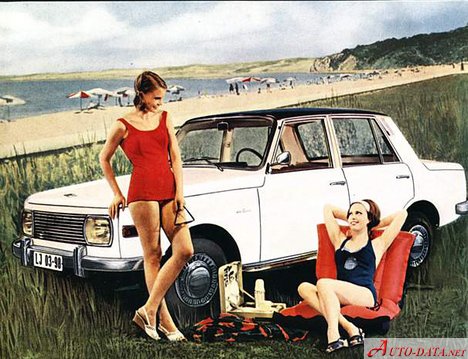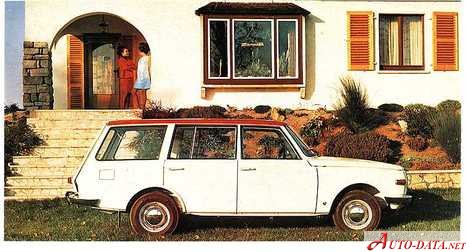
The Wartburg 353 Tourist 1.0, producing 50 horsepower, was a variant of the Wartburg 353, manufactured between 1975 and 1989. It represented the entry-level offering within the 353 range, a line of East German-built automobiles based on the aging but robust Wartburg platform. The 353 itself was a significant vehicle for the German Democratic Republic (GDR), serving as a primary mode of personal transportation for many East Germans. The Tourist 1.0, with its smaller engine, was designed to be more fuel-efficient and accessible to a wider segment of the population, though it came with compromises in performance. It was a five-door station wagon (estate) intended for family use and practical transportation.
Wartburg 353 Tourist 1.0: Overview and Positioning
The Wartburg 353, and specifically the Tourist 1.0 variant, occupied a unique position in the automotive landscape. Produced by VEB Automobilwerk Eisenach, the car was a product of the centrally planned economy of the GDR. While technologically behind Western European and North American vehicles of the time, the 353 was known for its durability and relatively simple construction. The Tourist 1.0 was the base model, positioned below the more powerful 1.3-liter versions. It was aimed at buyers prioritizing affordability and fuel economy over outright performance. The 353 range, including the Tourist, was based on the 1HX0 platform, a design that originated in the 1960s with the Wartburg 311.
Powertrain & Engine Architecture
The heart of the Wartburg 353 Tourist 1.0 was a 992 cc two-stroke, three-cylinder engine. This engine, designated as a variant within the broader Wartburg engine family, was notable for its unusual design. Two-stroke engines, while offering a high power-to-weight ratio, are inherently less fuel-efficient and produce higher emissions than four-stroke engines. The Wartburg engine utilized a Schnurle scavenging system, a type of two-stroke intake port design that improved efficiency compared to earlier designs. The engine produced 50 hp (37 kW) at 5,500 rpm and approximately 58 lb-ft (79 Nm) of torque at 3,500 rpm. Fuel was delivered via a single carburetor. The engine was mounted longitudinally in the front of the vehicle. Lubrication was achieved through a separate oil tank and oil injection system, a common feature of two-stroke engines. The engine was coupled to a four-speed manual transmission, driving the front wheels.
Driving Characteristics
The driving experience in a Wartburg 353 Tourist 1.0 was distinctly different from that of contemporary Western cars. The 50 hp engine provided modest acceleration, with a 0-60 mph (0-97 km/h) time estimated around 20-22 seconds. Top speed was officially rated at 150 km/h (93 mph), though achieving this in real-world conditions required a long, flat stretch of road. The four-speed manual transmission had relatively wide gear ratios, designed to maximize fuel economy and provide sufficient power for climbing hills. The engine was known for its characteristic two-stroke sound and vibration. Compared to the 1.3-liter versions of the 353, the Tourist 1.0 felt noticeably slower, particularly when fully loaded with passengers and cargo. However, the lighter engine weight contributed to slightly improved handling. The front-wheel-drive layout provided reasonable traction in most conditions, but the car was prone to understeer when pushed hard.
Equipment & Trim Levels
The Wartburg 353 Tourist 1.0 was sparsely equipped by Western standards, reflecting its position as an affordable, utilitarian vehicle. Standard features included basic cloth upholstery, a simple dashboard with minimal instrumentation (speedometer, fuel gauge, and temperature gauge), and manually operated windows and door locks. The interior was functional but lacked the refinement of cars from Western Europe. Heating was standard, but air conditioning was not available. Optional extras were limited, but could include a radio, upgraded upholstery, and a sunroof. The exterior trim was minimal, with black plastic bumpers and relatively simple steel wheels. The body was typically finished in a limited range of colors, often muted shades of blue, green, or beige. The Tourist trim level generally represented the base specification, with fewer cosmetic enhancements than the more upscale “De Luxe” models.
Chassis & Braking
The Wartburg 353 Tourist 1.0 utilized a relatively simple chassis design. The front suspension consisted of independent coil springs and wishbones, while the rear suspension employed a rigid axle with coil springs. The steering was a rack and pinion system, providing reasonable precision. The braking system featured disc brakes on the front wheels and drum brakes on the rear wheels. The brakes were adequate for normal driving conditions, but lacked the stopping power of more modern systems. The car rode on 13-inch steel wheels, typically fitted with 185/65 R13 tires. A stabilizer bar was fitted to the front suspension to reduce body roll. The overall chassis setup was designed for durability and ease of maintenance, rather than sporty handling.
Market Reception & Comparison
The Wartburg 353 Tourist 1.0 was primarily sold within the Eastern Bloc countries, with limited exports to Western Europe. It was generally viewed as a practical and reliable, if somewhat outdated, vehicle. Critics often noted its lack of refinement, modest performance, and high emissions. However, its affordability and durability made it a popular choice for families and individuals seeking basic transportation. Compared to other cars available in the GDR, such as the Trabant, the Wartburg 353 offered a more robust and comfortable driving experience. Fuel economy was a key selling point, particularly for the 1.0-liter version. However, the 1.3-liter versions of the 353 offered significantly better performance and were often preferred by those who could afford the higher price. In terms of reliability, the Wartburg 353 was generally considered to be reasonably dependable, although maintenance could be time-consuming due to the two-stroke engine’s specific requirements.
Technical Specifications
| Body Type | Station Wagon (Estate) |
| Production Years | 1975 – 1989 |
| Engine Type | Two-Stroke, Three-Cylinder |
| Engine Displacement | 992 cc |
| Maximum Power | 50 hp (37 kW) @ 5,500 rpm |
| Maximum Torque | 58 lb-ft (79 Nm) @ 3,500 rpm |
| Fuel System | Carburetor |
| Transmission | 4-Speed Manual |
| Drive Type | Front-Wheel Drive |
| Fuel Tank Capacity | 48 liters (12.68 US gallons) |
| Top Speed | 150 km/h (93 mph) |
| Tire Size | 185/65 R13 |
| Brakes (Front) | Disc |
| Brakes (Rear) | Drum |
Legacy
The Wartburg 353 Tourist 1.0, and the 353 range as a whole, represents a significant chapter in East German automotive history. While not a technologically advanced vehicle, it provided reliable transportation for a generation of East Germans. Today, the Wartburg 353 is a sought-after classic car, particularly among enthusiasts of Eastern European automobiles. The two-stroke engine requires specialized knowledge and maintenance, but its unique character and historical significance make it a rewarding vehicle to own. Parts availability can be challenging, but a dedicated community of owners and restorers exists. The 1.0-liter version, while the least powerful, is often considered the most affordable and accessible entry point into Wartburg ownership. Its simplicity and relatively low running costs make it a popular choice for those seeking a unique and historically significant classic car.