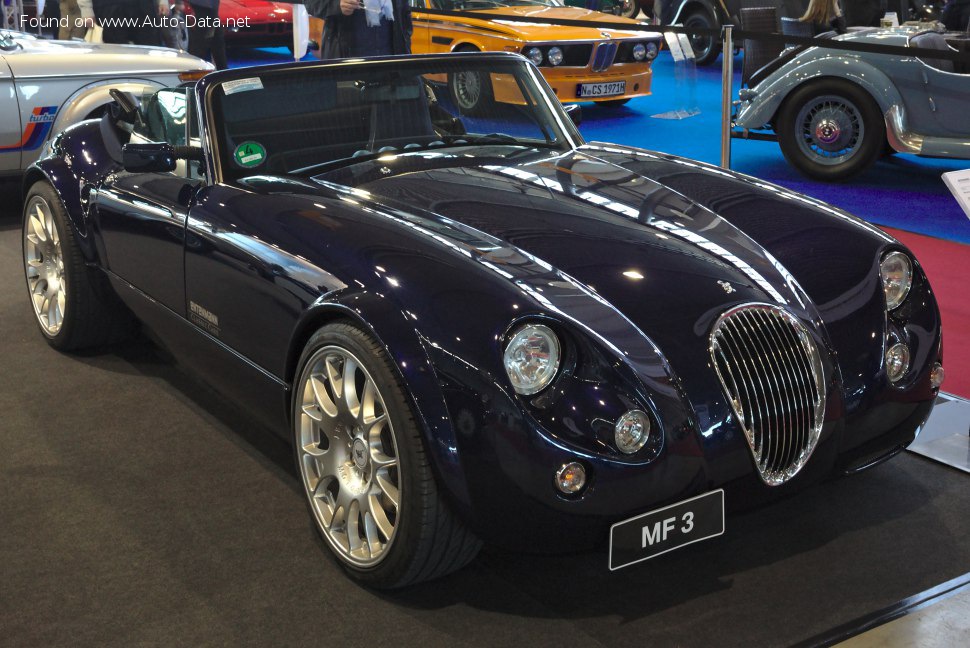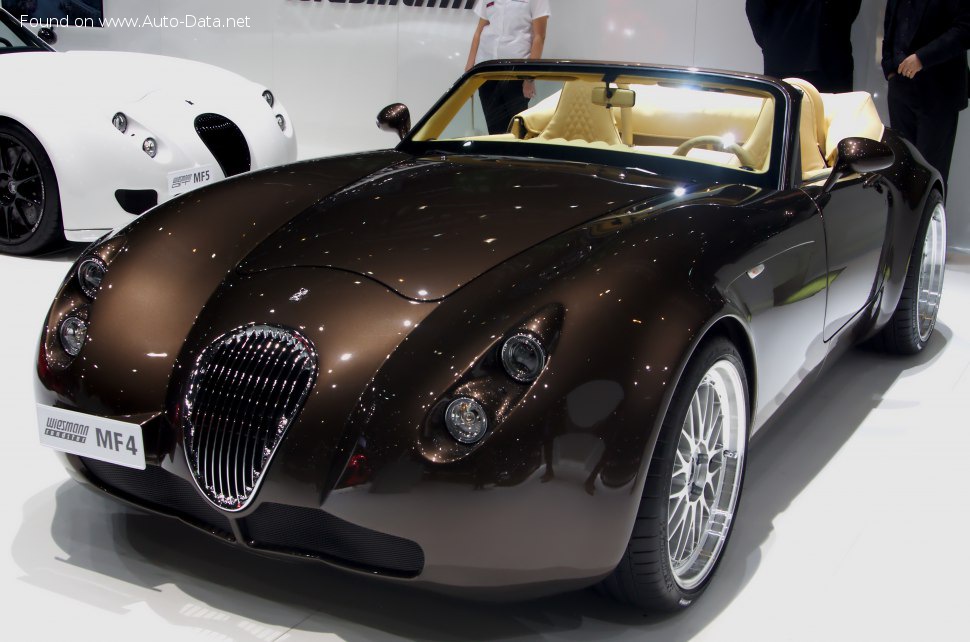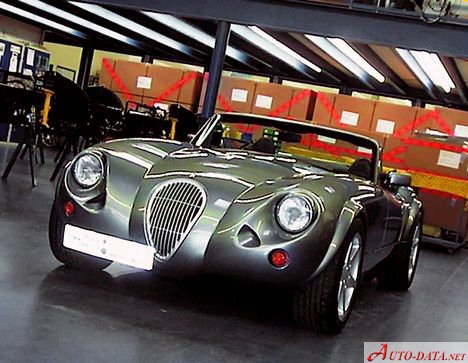
The Wiesmann Roadster 3.2i 24V, producing 321 horsepower, was a hand-built German sports car produced between 1993 and 2005. It represented the core of the Wiesmann lineup during its production run, embodying the company’s philosophy of blending classic British roadster aesthetics with German engineering and performance. The Roadster was built on a custom chassis and utilized BMW running gear, offering a unique driving experience in a relatively small production volume. It was positioned as a premium, exclusive sports car, appealing to enthusiasts seeking a distinctive alternative to more mainstream offerings.
Wiesmann Roadster 3.2i 24V: Overview and Positioning
The Wiesmann Roadster was the first model produced by the company, founded by Friedhelm Wiesmann in 1988. The 3.2i 24V variant, introduced relatively early in the production cycle, became the most recognizable and frequently produced version. It distinguished itself from potential future variants (though none materialized in significant numbers) by offering a compelling balance of power, handling, and exclusivity. The car’s design was heavily influenced by the classic British roadsters of the 1950s and 60s, particularly the Jaguar E-Type, but executed with a modern, German precision. The Roadster was not intended to compete directly with high-volume sports cars; instead, it targeted a niche market of buyers willing to pay a premium for a bespoke, hand-crafted vehicle.
Powertrain & Engine Architecture
At the heart of the Wiesmann Roadster 3.2i 24V lies the BMW M30B32 inline-six engine. This 3.2-liter (3201 cm3 / 195.34 cu. in.) naturally aspirated engine, originally designed for the BMW E36 M3, was renowned for its smooth power delivery and robust construction. The “24V” designation refers to the four valves per cylinder configuration, contributing to the engine’s high specific output. The engine produced 321 hp at 7400 rpm and 350 Nm (258.15 lb.-ft.) of torque at 3250 rpm. This resulted in a power-to-liter ratio of 100.3 hp/l. Fuel delivery was managed by a multi-port manifold injection system. The engine featured a double overhead camshaft (DOHC) valvetrain, optimizing airflow for improved performance.
The engine was mated to a 6-speed manual transmission, sending power to the rear wheels. This configuration was standard throughout the production run of the 3.2i 24V. While an automatic transmission was offered on some BMW models utilizing the M30 engine, Wiesmann did not offer an automatic option for the Roadster, prioritizing driver engagement and performance. The drivetrain architecture consisted of a rear-wheel drive setup, contributing to the car’s balanced handling characteristics.
Driving Characteristics
The Wiesmann Roadster 3.2i 24V offered a distinctly engaging driving experience. The combination of the potent M30B32 engine and the lightweight chassis (1060 kg / 2336.9 lbs.) resulted in impressive acceleration. The car could sprint from 0 to 60 mph in approximately 4.7 seconds, and 0-100 km/h in 4.9 seconds, with a top speed of 255 km/h (158.45 mph). The 6-speed manual transmission provided precise gear changes, allowing drivers to fully exploit the engine’s powerband. The rear-wheel drive layout and well-tuned suspension contributed to neutral handling and predictable cornering behavior.
Compared to the standard BMW E36 M3, the Wiesmann Roadster offered a more raw and visceral driving experience. The Roadster’s lighter weight and shorter wheelbase made it feel more agile and responsive. While the M3 offered a more refined and technologically advanced interior, the Roadster prioritized a classic, driver-focused cockpit. The lack of electronic driver aids (beyond ABS) further enhanced the sense of connection between driver and machine.
Equipment & Trim Levels
The Wiesmann Roadster 3.2i 24V was characterized by its relatively sparse, yet high-quality interior. The focus was on providing a driver-centric environment, rather than luxurious amenities. Standard features included leather upholstery, sports seats, and a leather-wrapped steering wheel. The dashboard was relatively simple in design, featuring analog gauges for speed, RPM, and other vital information. Air conditioning and a basic sound system were typically included as standard equipment.
Wiesmann offered a degree of customization, allowing customers to specify interior colors and materials. Optional extras included upgraded sound systems, power windows, and various cosmetic enhancements. However, the Roadster was never offered with a long list of options, maintaining its focus on simplicity and driving purity. The exterior was typically finished in a high-quality paint color, with a choice of chrome or body-colored trim.
Chassis & Braking
The Wiesmann Roadster utilized a custom-built steel tube chassis, providing a rigid and lightweight foundation for the vehicle. The suspension consisted of spring struts at the front and a transverse stabilizer at the rear. This setup provided a good balance of ride comfort and handling performance. The car’s relatively low weight contributed to its agility and responsiveness.
Braking duties were handled by ventilated discs at the front and solid discs at the rear. The braking system was equipped with ABS (Anti-lock braking system) as standard, enhancing safety and control. The steering system was a rack and pinion setup with hydraulic power steering, providing precise and responsive steering feel. The car rode on 17-inch wheels with 215/50 R17 tires.
Market Reception & Comparison
The Wiesmann Roadster 3.2i 24V received generally positive reviews from automotive critics. It was praised for its distinctive styling, engaging driving experience, and high-quality construction. Critics noted the car’s unique blend of classic and modern elements, as well as its exclusivity. However, some reviewers pointed to the relatively high price tag and the lack of some modern conveniences as potential drawbacks.
Compared to other sports cars in its price range, the Wiesmann Roadster offered a unique proposition. It was more focused on driving purity and exclusivity than many of its competitors. While cars like the Porsche 911 offered superior performance and refinement, the Wiesmann Roadster provided a more raw and visceral driving experience. Fuel economy was rated at 11 l/100 km (21.4 US mpg / 25.7 UK mpg / 9.1 km/l), which was typical for a sports car of its era.
Technical Specifications
| Brand | Wiesmann |
| Model | Roadster |
| Generation | Roadster |
| Type (Engine) | 3.2i 24V (321 Hp) |
| Start of production | 1993 |
| End of production | 2005 |
| Powertrain Architecture | Internal Combustion engine |
| Body type | Roadster |
| Seats | 2 |
| Doors | 2 |
| Fuel consumption (combined) | 11 l/100 km |
| Fuel Type | Petrol (Gasoline) |
| Acceleration 0 – 100 km/h | 4.9 sec |
| Acceleration 0 – 62 mph | 4.9 sec |
| Acceleration 0 – 60 mph | 4.7 sec |
| Maximum speed | 255 km/h / 158.45 mph |
| Weight-to-power ratio | 3.3 kg/Hp |
| Weight-to-torque ratio | 3 kg/Nm |
| Power | 321 Hp @ 7400 rpm |
| Torque | 350 Nm @ 3250 rpm / 258.15 lb.-ft. @ 3250 rpm |
| Engine displacement | 3201 cm3 / 195.34 cu. in. |
| Number of cylinders | 6 |
| Engine configuration | Inline |
| Cylinder Bore | 86.4 mm / 3.4 in. |
| Piston Stroke | 91 mm / 3.58 in. |
| Compression ratio | 11.3:1 |
| Number of valves per cylinder | 4 |
| Fuel injection system | Multi-port manifold injection |
| Engine aspiration | Naturally aspirated engine |
| Valvetrain | DOHC |
| Kerb Weight | 1060 kg / 2336.9 lbs. |
| Fuel tank capacity | 60 l / 15.85 US gal | 13.2 UK gal |
| Length | 3860 mm / 151.97 in. |
| Width | 1750 mm / 68.9 in. |
| Height | 1160 mm / 45.67 in. |
| Wheelbase | 2450 mm / 96.46 in. |
| Front track | 1450 mm / 57.09 in. |
| Rear track | 1520 mm / 59.84 in. |
| Minimum turning circle | 9.8 m / 32.15 ft. |
| Drivetrain Architecture | Rear wheel drive |
| Number of gears and type of gearbox | 6 gears, manual transmission |
| Front suspension | Spring Strut |
| Rear suspension | Transverse stabilizer |
| Front brakes | Ventilated discs |
| Rear brakes | Disc |
| Assisting systems | ABS (Anti-lock braking system) |
| Steering type | Steering rack and pinion |
| Power steering | Hydraulic Steering |
| Tires size | 215/50 R17 |
| Wheel rims size | 17 |
Legacy
The Wiesmann Roadster 3.2i 24V remains a sought-after vehicle among collectors and enthusiasts. Its limited production numbers and unique character contribute to its desirability. The M30B32 engine is known for its reliability and durability, although regular maintenance is essential to ensure its longevity. Parts availability can be a challenge, as many components are specific to the BMW M3 of the same era. Today, well-maintained examples of the Roadster 3.2i 24V command significant prices in the used car market, reflecting their rarity and the enduring appeal of their classic roadster design.