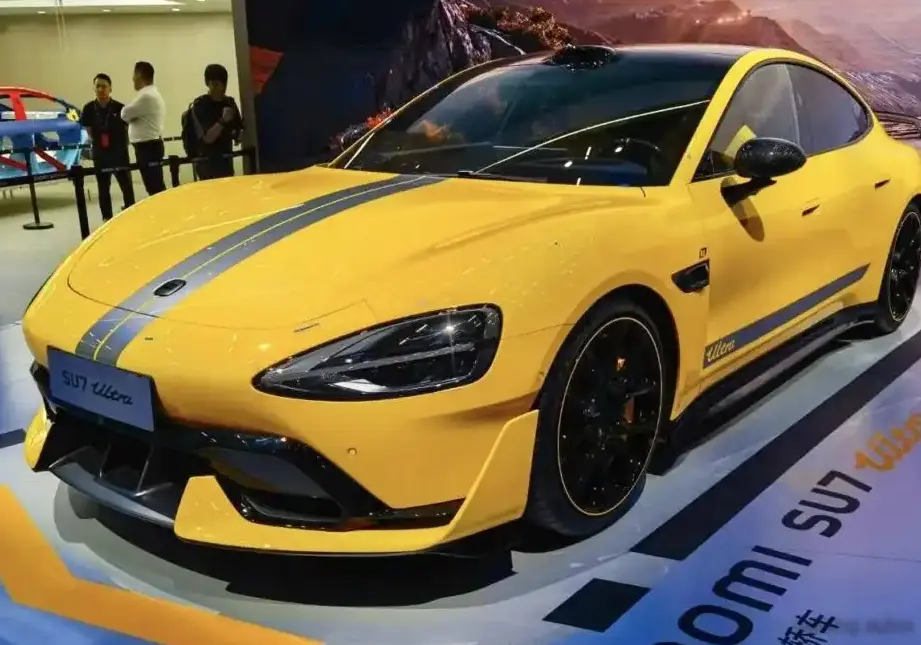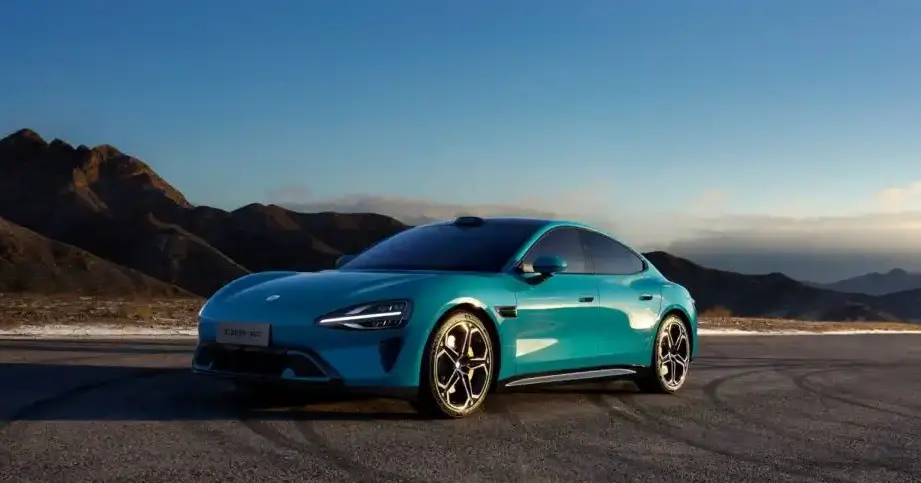
The Xiaomi SU7, launched in December 2023, represents Xiaomi’s ambitious entry into the electric vehicle (EV) market. This all-electric sedan is positioned as a technologically advanced and performance-oriented vehicle, aiming to disrupt the established automotive landscape. The 73.6 kWh variant, producing 299 horsepower, serves as a key model within the SU7 lineup, offering a balance between range, performance, and price. It’s designed to compete with established EV manufacturers like Tesla, Nio, and BYD, particularly in the mid-range segment.
Technical Specifications
| Brand | Xiaomi |
| Model | SU7 |
| Generation | SU7 |
| Type (Engine) | 73.6 kWh (299 Hp) |
| Start of production | December, 2023 |
| Powertrain Architecture | BEV (Electric Vehicle) |
| Body type | Sedan |
| Seats | 5 |
| Doors | 4 |
| Fuel Type | Electricity |
| Acceleration 0 – 100 km/h | 5.28 sec |
| Acceleration 0 – 62 mph | 5.28 sec |
| Acceleration 0 – 60 mph | 5 sec |
| Maximum speed | 210 km/h (130.49 mph) |
| 100 km/h – 0 | 35.5 m |
| Weight-to-power ratio | 6.6 kg/Hp, 151 Hp/tonne |
| Weight-to-torque ratio | 5 kg/Nm, 202 Nm/tonne |
| Gross battery capacity | 73.6 kWh |
| Battery voltage | 486 V |
| Battery technology | Lithium iron phosphate (LiFePO4) |
| Battery weight | 579 kg (1276.48 lbs) |
| Battery location | Below the floor |
| All-electric range (CLTC) | 668-700 km (415.08 – 434.96 mi) |
| Average Energy consumption (CLTC) | 12.3 kWh/100 km (19.79 kWh/100 mi) |
| MPGe | 170 |
| km/kWh | 8.1 |
| mi/kWh | 5.1 |
| Electric motor power | 299 Hp |
| Electric motor Torque | 400 Nm (295.02 lb.-ft.) |
| Electric motor model/code | TZ220XS000 |
| Maximum revolutions of the electric motor | 21000 rpm |
| Electric motor location | Rear axle, Transverse |
| Electric motor type | Synchronous |
| System power | 299 Hp |
| System torque | 400 Nm (295.02 lb.-ft.) |
| Kerb Weight | 1980 kg (4365.15 lbs) |
| Max. weight | 2430 kg (5357.23 lbs) |
| Max load | 450 kg (992.08 lbs) |
| Trunk (boot) space – minimum | 517 l (18.26 cu. ft.) |
| Length | 4997 mm (196.73 in) |
| Width | 1963 mm (77.28 in) |
| Height | 1455 mm (57.28 in) |
| Wheelbase | 3000 mm (118.11 in) |
| Front track | 1693 mm (66.65 in) |
| Rear (Back) track | 1699 mm (66.89 in) |
| Front overhang | 975 mm (38.39 in) |
| Rear overhang | 1022 mm (40.24 in) |
| Drag coefficient (Cd) | 0.195 |
| Minimum turning circle | 11.4 m (37.4 ft) |
| Approach angle | 14° |
| Departure angle | 16° |
| Drivetrain Architecture | One electric motor drives the rear wheels |
| Drive wheel | Rear wheel drive |
| Number of gears | 1 |
| Type of gearbox | Automatic transmission |
| Front suspension | Double wishbone |
| Rear suspension | Independent multi-link suspension |
| Front brakes | Ventilated discs |
| Rear brakes | Ventilated discs |
| Assisting systems | ABS (Anti-lock braking system) |
| Steering type | Steering rack and pinion |
| Power steering | Electric |
| Tires size | 245/45 R19; 245/40 R20 |
| Wheel rims size | 19; 20 |
Powertrain & Engine Architecture
The Xiaomi SU7 73.6 kWh variant utilizes a single rear-mounted synchronous electric motor, designated TZ220XS000. This motor delivers a peak output of 299 horsepower and 400 Nm (295 lb-ft) of torque. The powertrain is built around a 73.6 kWh Lithium Iron Phosphate (LiFePO4) battery pack, offering a CLTC-rated range of 668-700 kilometers (415-435 miles). LiFePO4 chemistry is favored for its improved thermal stability and longer cycle life compared to traditional Nickel Manganese Cobalt (NMC) batteries, although it typically offers slightly lower energy density. The battery pack is positioned under the floor, contributing to a low center of gravity and improved handling. The vehicle employs an 800V architecture, enabling faster charging times when connected to compatible DC fast chargers. The single-speed automatic transmission is a standard feature for all SU7 models, providing seamless acceleration and efficient power delivery.
Driving Characteristics
The SU7 73.6 kWh delivers brisk acceleration, achieving 0-60 mph in approximately 5 seconds. While not as quick as the higher-performance variants, it provides ample power for everyday driving and highway overtaking. The rear-wheel-drive configuration contributes to a balanced feel, although traction control is essential in slippery conditions. The single-speed transmission offers smooth and linear acceleration, without the gear changes experienced in traditional internal combustion engine vehicles. The low center of gravity, thanks to the underfloor battery pack, enhances stability and cornering ability. The steering is precise and well-weighted, providing a confident driving experience. Energy consumption is rated at 12.3 kWh per 100 kilometers (19.79 kWh per 100 miles), translating to a respectable efficiency rating.
Equipment & Trim Levels
The SU7 73.6 kWh variant typically comes standard with a comprehensive suite of technology and comfort features. These include a large touchscreen infotainment system, a digital instrument cluster, advanced driver-assistance systems (ADAS) such as adaptive cruise control and lane-keeping assist, and a premium sound system. Interior upholstery is typically a combination of leatherette and fabric, with options for full leather upgrades. Standard exterior features include LED headlights and taillights, alloy wheels, and aerodynamic body styling. Optional extras may include a panoramic sunroof, ventilated and heated seats, and a more powerful audio system. The overall interior design emphasizes minimalism and a high-tech aesthetic.
Chassis & Braking
The SU7 utilizes a double wishbone suspension setup at the front and an independent multi-link suspension at the rear, providing a comfortable and controlled ride. Ventilated disc brakes are fitted on all four wheels, ensuring strong stopping power. The electronic stability control (ESC) system and anti-lock braking system (ABS) work in conjunction to enhance safety and stability. The vehicle’s chassis is constructed from a combination of high-strength steel and aluminum, optimizing both rigidity and weight. The steering system employs an electric power steering (EPS) system, providing precise and responsive steering feel.
Market Reception & Comparison
The Xiaomi SU7 has garnered significant attention in the Chinese EV market, with initial reviews praising its performance, technology, and value proposition. Critics have noted the vehicle’s competitive pricing compared to rivals like Tesla Model 3 and Nio ET5. The 73.6 kWh variant is seen as a sweet spot in the lineup, offering a good balance between range and affordability. Compared to the higher-performance SU7 Max, the 73.6 kWh model sacrifices some acceleration but gains in efficiency and cost. Reliability data is still emerging, given the vehicle’s recent launch, but Xiaomi’s focus on LiFePO4 battery technology suggests a potentially longer lifespan and improved safety compared to some competitors.
Legacy
The Xiaomi SU7 represents a significant step for Xiaomi as it expands beyond consumer electronics and into the automotive industry. The 73.6 kWh variant is expected to be a popular choice among consumers seeking a technologically advanced and efficient electric sedan. Its success will likely influence Xiaomi’s future EV development plans and potentially encourage other tech companies to enter the automotive market. The long-term reliability of the powertrain, particularly the LiFePO4 battery pack, will be a key factor in determining the SU7’s lasting legacy. As the EV market continues to evolve, the SU7 is poised to become a notable contender, challenging established automakers and driving innovation in the electric vehicle space.