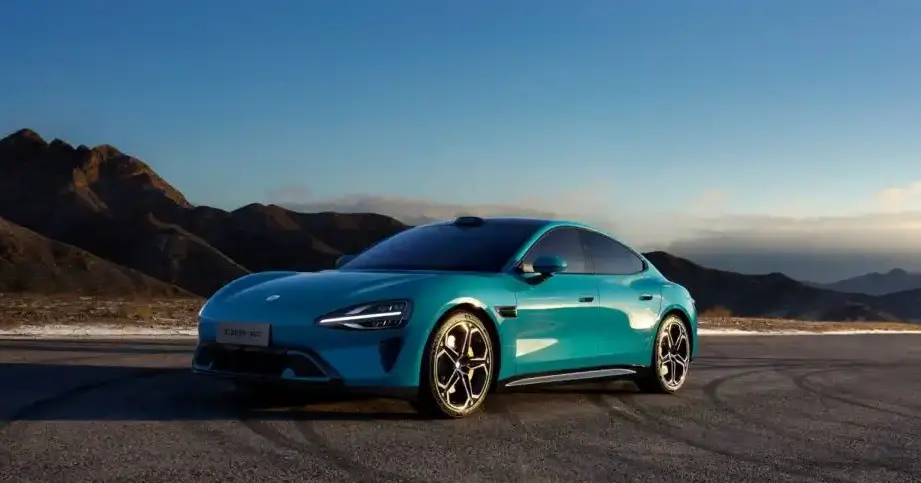
The Xiaomi SU7 Pro 94.3 kWh represents Xiaomi’s initial foray into the automotive market, launched in 2024. Positioned as a premium variant within the SU7 lineup, it aims to compete in the burgeoning electric vehicle (EV) sedan segment. The SU7, and specifically the Pro version, is designed to offer a blend of performance, range, and technology, leveraging Xiaomi’s expertise in consumer electronics. It’s primarily targeted at the Chinese market initially, but with potential for expansion into other global markets. The vehicle is built on a dedicated EV platform and showcases Xiaomi’s ambitions to become a significant player in the automotive industry.
Technical Specifications
| Brand | Xiaomi |
| Model | SU7 |
| Generation | SU7 |
| Type (Engine) | Pro 94.3 kWh (299 Hp) |
| Start of production | 2024 |
| Powertrain Architecture | BEV (Electric Vehicle) |
| Body type | Sedan |
| Seats | 5 |
| Doors | 4 |
| Fuel Type | Electricity |
| Acceleration 0 – 100 km/h | 5.7 sec |
| Acceleration 0 – 62 mph | 5.7 sec |
| Acceleration 0 – 60 mph | 5.4 sec |
| Maximum speed | 210 km/h (130.49 mph) |
| Gross battery capacity | 94.3 kWh |
| Battery voltage | 486 V |
| Battery location | Below the floor |
| All-electric range (WLTP) | 758-830 km (471 – 515.74 mi) |
| Electric motor power | 299 Hp |
| Electric motor Torque | 400 Nm (295.02 lb.-ft.) |
| Electric motor model/code | TZ220XS000 |
| Electric motor location | Rear axle, Transverse |
| Electric motor type | Synchronous |
| System power | 299 Hp |
| System torque | 400 Nm (295.02 lb.-ft.) |
| Trunk (boot) space – minimum | 517 l (18.26 cu. ft.) |
| Length | 4997 mm (196.73 in.) |
| Width | 1963 mm (77.28 in.) |
| Height | 1455 mm (57.28 in.) |
| Wheelbase | 3000 mm (118.11 in.) |
| Front track | 1693 mm (66.65 in.) |
| Rear (Back) track | 1699 mm (66.89 in.) |
| Front overhang | 975 mm (38.39 in.) |
| Rear overhang | 1022 mm (40.24 in.) |
| Drag coefficient (Cd) | 0.195 |
| Minimum turning circle | 11.4 m (37.4 ft.) |
| Approach angle | 14° |
| Departure angle | 16° |
| Drivetrain Architecture | One electric motor drives the rear wheels. |
| Drive wheel | Rear wheel drive |
| Number of gears | 1 |
| Gearbox type | Automatic transmission |
| Front suspension | Double wishbone |
| Rear suspension | Independent multi-link suspension |
| Front brakes | Ventilated discs |
| Rear brakes | Ventilated discs |
| Assisting systems | ABS (Anti-lock braking system) |
| Steering type | Steering rack and pinion |
| Power steering | Electric |
| Tires size | 245/45 R19; 245/40 R20 |
| Wheel rims size | 19; 20 |
Powertrain & Engine Architecture
The Xiaomi SU7 Pro is built around a fully electric powertrain. The core of the system is a single rear-mounted synchronous electric motor, designated TZ220XS000, producing 299 horsepower and 400 Nm (295 lb-ft) of torque. This motor is powered by a 94.3 kWh battery pack located under the vehicle floor, providing a voltage of 486V. The battery chemistry is not publicly disclosed, but is expected to be Lithium-ion based. The single-speed automatic transmission is a standard component in most modern EVs, providing a direct drive from the motor to the rear wheels. The vehicle utilizes a sophisticated battery management system (BMS) to optimize charging, discharging, and thermal management, contributing to the impressive WLTP range of 758-830 km (471-515.74 miles).
Driving Characteristics
The SU7 Pro delivers brisk acceleration, achieving 0-100 km/h (0-62 mph) in 5.7 seconds, and 0-60 mph in approximately 5.4 seconds. The rear-wheel-drive configuration provides a sporty feel, although traction control systems are crucial for managing power delivery, especially in adverse conditions. The single-speed transmission offers seamless acceleration, without the gear changes found in traditional internal combustion engine vehicles. Compared to potential future higher-performance variants, the Pro model prioritizes range and efficiency over outright speed. The steering is precise and well-weighted, contributing to a confident driving experience. The low center of gravity, thanks to the underfloor battery pack, enhances stability and handling.
Equipment & Trim Levels
The SU7 Pro trim comes standard with a comprehensive suite of technology and comfort features. Interior appointments include premium seating materials, a large central touchscreen infotainment system, and a digital instrument cluster. Standard safety features include ABS, traction control, and a suite of driver-assistance systems. Optional extras include advanced driver-assistance systems (ADAS) such as adaptive cruise control, lane-keeping assist, and automatic emergency braking. The interior design emphasizes minimalism and a high-tech aesthetic, reflecting Xiaomi’s design philosophy. Available wheel sizes range from 19 to 20 inches, impacting both aesthetics and rolling resistance.
Chassis & Braking
The SU7 Pro features a double wishbone front suspension and an independent multi-link rear suspension, designed to provide a comfortable ride and responsive handling. Ventilated disc brakes are used on all four wheels, providing ample stopping power. The electric power steering system offers precise control and variable assistance. The vehicle’s relatively low weight, due to the use of lightweight materials in its construction, contributes to its agility. The suspension tuning is geared towards a balance between comfort and handling, making it suitable for both city driving and longer highway journeys.
Market Reception & Comparison
Initial reception of the Xiaomi SU7 Pro has been positive, particularly in China, where it has generated significant pre-order interest. Critics have praised its range, performance, and technology. Compared to other EVs in its class, such as the Tesla Model 3 and the BYD Han, the SU7 Pro offers a competitive combination of features and price. Its drag coefficient of 0.195 is particularly noteworthy, contributing to its impressive range. The SU7 Pro’s focus on technology and integration with Xiaomi’s ecosystem of devices is also seen as a key differentiator. Long-term reliability remains to be seen, as the vehicle is a new entrant to the market.
Legacy
The Xiaomi SU7 Pro represents a significant step for Xiaomi as it enters the automotive industry. Its success will be crucial in establishing the brand as a credible EV manufacturer. The powertrain technology and battery management system employed in the SU7 Pro will likely serve as a foundation for future Xiaomi EV models. The vehicle’s impact on the Chinese EV market, and potentially global markets, will depend on its ability to deliver on its promises of performance, range, and reliability. The SU7 Pro’s long-term legacy will be defined by its contribution to the adoption of electric vehicles and the evolution of automotive technology.