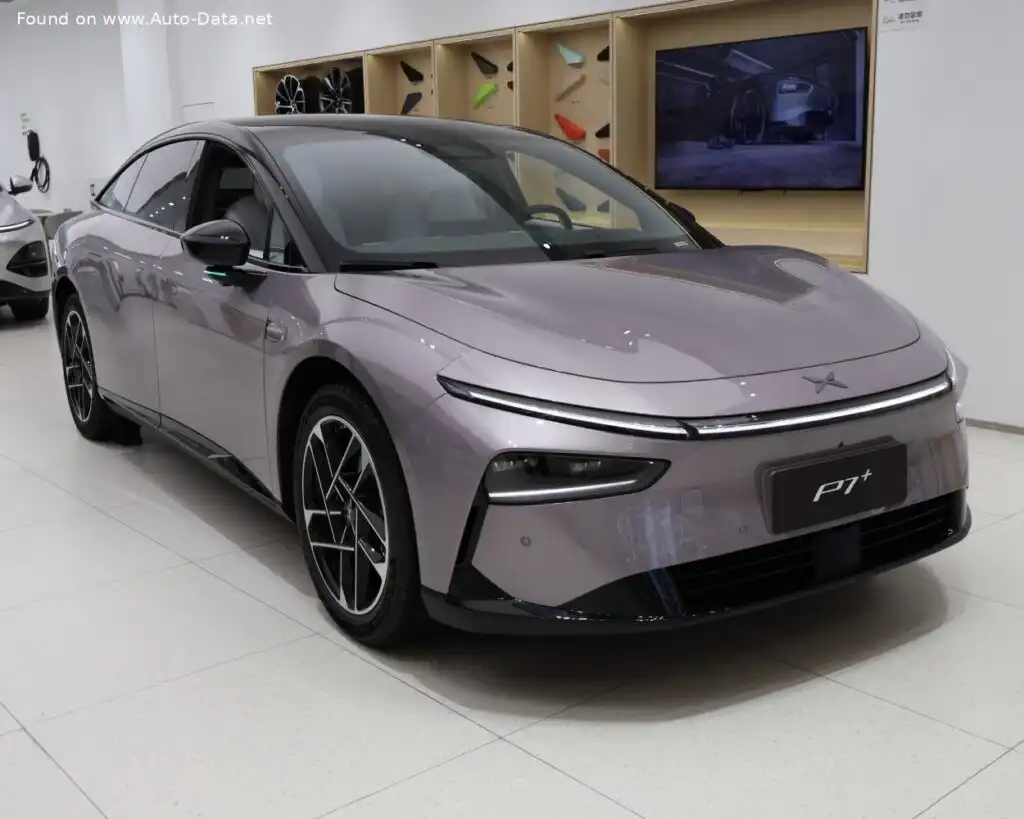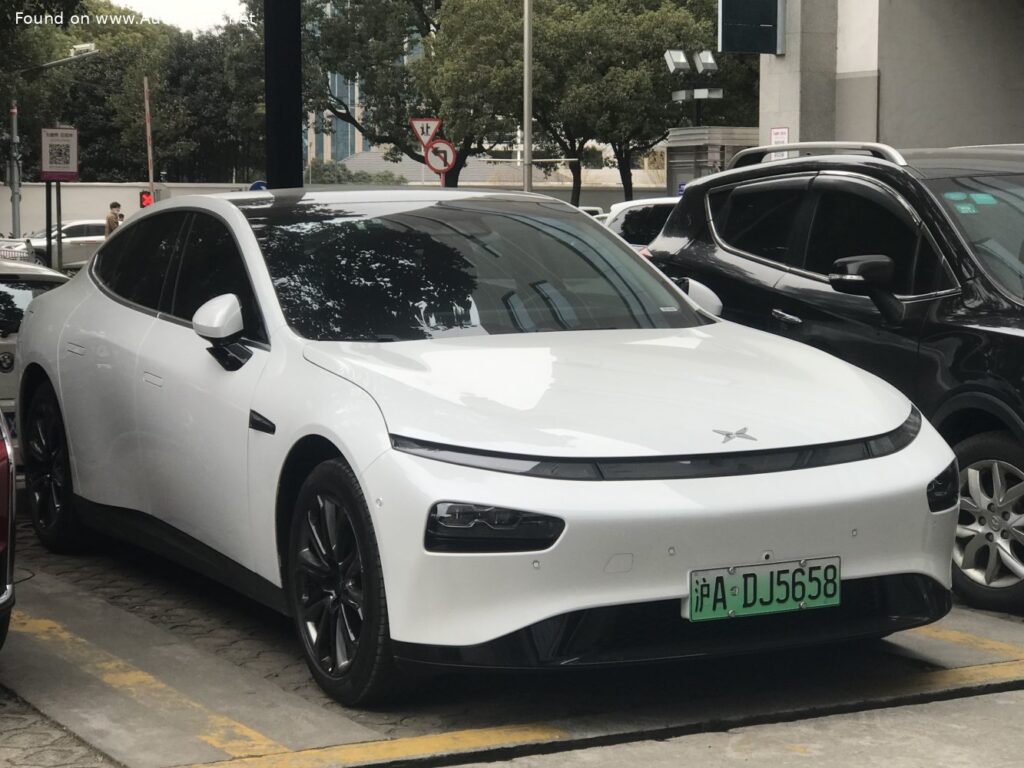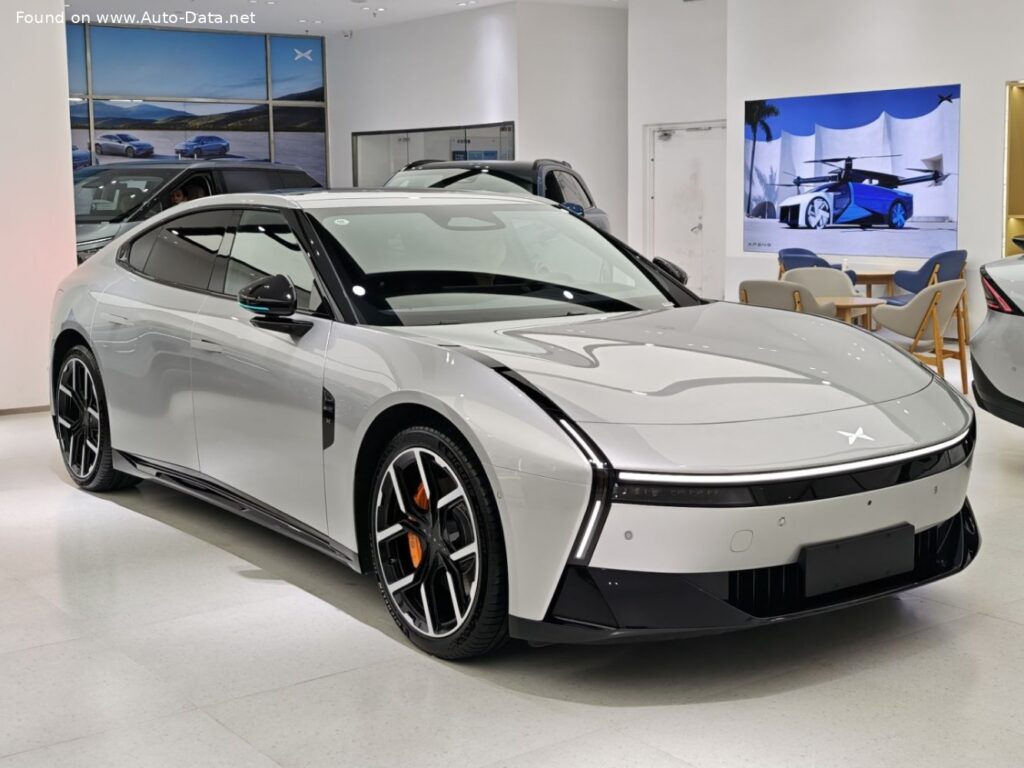
The XPENG P7 II 74.9 kWh Long Range Ultra is an all-electric fastback produced by the Chinese manufacturer XPENG. Introduced in August 2025, the P7 II represents a significant evolution of the original P7, focusing on enhanced technology, improved efficiency, and a refined driving experience. While XPENG is relatively new to the global automotive market, it has quickly become a prominent player in China’s burgeoning electric vehicle (EV) sector, competing with established automakers and other EV startups. The P7 II is primarily targeted at the Chinese domestic market, offering a compelling alternative to vehicles like the Tesla Model 3 and other mid-size electric sedans and fastbacks. Its design and features are geared towards tech-savvy consumers seeking a stylish, long-range, and technologically advanced EV.
XPENG P7 II: A Technological Showcase
The P7 II builds upon the foundation of the original P7, incorporating advancements in battery technology, powertrain efficiency, and autonomous driving capabilities. It’s positioned as a premium electric vehicle, emphasizing both performance and luxury. The “Long Range Ultra” designation indicates a larger battery pack and increased range compared to other variants within the P7 II lineup. XPENG’s strategy centers around delivering cutting-edge technology directly to consumers, often bypassing traditional dealership networks and focusing on a direct-to-consumer sales model. This approach allows for greater control over the customer experience and faster implementation of software updates and new features.
Engine & Performance
The XPENG P7 II 74.9 kWh Long Range Ultra is powered by a single electric motor located on the rear axle, delivering 367 horsepower (Hp) and 465 Newton-meters (342.97 lb.-ft.) of torque. This configuration results in a rear-wheel-drive (RWD) powertrain. Acceleration from 0 to 100 km/h (0-62 mph) is achieved in 5.8 seconds, while the 0 to 60 mph sprint takes a calculated 5.5 seconds. The vehicle boasts a maximum speed of 230 km/h (142.92 mph). The powertrain utilizes a single-speed automatic transmission. The weight-to-power ratio is 5.8 kg/Hp, and the weight-to-torque ratio is 4.6 kg/Nm. The 74.9 kWh lithium iron phosphate (LiFePO4) battery is mounted beneath the floor, contributing to a low center of gravity and improved handling. The battery operates at 800V, enabling faster charging times.
Design & Features
The XPENG P7 II is a five-door fastback, blending the sleek profile of a coupe with the practicality of a sedan. Its exterior design is characterized by flowing lines, a prominent rear spoiler, and flush door handles that contribute to a streamlined appearance. The interior is focused on minimalism and technology, featuring a large central touchscreen display and a digital instrument cluster. The vehicle offers seating for five passengers and provides 575 liters (20.31 cu. ft.) of trunk space in its standard configuration, expandable to 1929 liters (68.12 cu. ft.) with the rear seats folded down. Safety features include ABS (Anti-lock Braking System) and a comprehensive suite of advanced driver-assistance systems (ADAS), reflecting XPENG’s commitment to autonomous driving technology. The suspension system utilizes double wishbones at the front and an independent multi-link setup at the rear, both incorporating air suspension and a transverse stabilizer for enhanced ride comfort and handling. Ride height (ground clearance) is 142 mm (5.59 in).
Technical Specifications
| Brand | XPENG |
| Model | P7 |
| Generation | P7 II |
| Type | 74.9 kWh (367 Hp) Long Range Ultra |
| Start of production | August, 2025 |
| Powertrain Architecture | BEV (Electric Vehicle) |
| Body type | Fastback |
| Seats | 5 |
| Doors | 5 |
| Fuel Type | Electricity |
| Acceleration 0 – 100 km/h | 5.8 sec |
| Acceleration 0 – 62 mph | 5.8 sec |
| Acceleration 0 – 60 mph | 5.5 sec |
| Maximum speed | 230 km/h (142.92 mph) |
| Weight-to-power ratio | 5.8 kg/Hp |
| Weight-to-torque ratio | 4.6 kg/Nm |
| Gross battery capacity | 74.9 kWh |
| Battery voltage | 800 V |
| Battery technology | Lithium iron phosphate (LiFePO4) |
| Battery location | Below the floor |
| All-electric range (CLTC) | 625-702 km (388.36 – 436.2 mi) |
| Average Energy consumption (CLTC) | 12-13.7 kWh/100 km (19.31 – 22.05 kWh/100 mi) |
| Electric motor power | 367 Hp |
| Electric motor Torque | 465 Nm (342.97 lb.-ft.) |
| Electric motor model/code | TZ230XY01E29X |
| Electric motor location | Rear axle, Transverse |
| Electric motor type | Synchronous |
| Kerb Weight | 2125 kg (4684.82 lbs.) |
| Max. weight | 2575 kg (5676.9 lbs.) |
| Max load | 450 kg (992.08 lbs.) |
| Trunk (boot) space – minimum | 575 l (20.31 cu. ft.) |
| Trunk (boot) space – maximum | 1929 l (68.12 cu. ft.) |
| Length | 5017 mm (197.52 in.) |
| Width | 1970 mm (77.56 in.) |
| Height | 1427 mm (56.18 in.) |
| Wheelbase | 3008 mm (118.43 in.) |
| Front track | 1682 mm (66.22 in.) |
| Rear (Back) track | 1682 mm (66.22 in.) |
| Ride height (ground clearance) | 142 mm (5.59 in.) |
| Drag coefficient (Cd) | 0.201 |
| Approach angle | 13° |
| Departure angle | 14° |
| Drivetrain Architecture | One electric motor drives the rear wheels. |
| Drive wheel | Rear wheel drive |
| Number of gears and type of gearbox | 1 gears, automatic transmission |
| Front suspension | Double wishbone, Transverse stabilizer, Air suspension |
| Rear suspension | Independent multi-link suspension, Air suspension, Transverse stabilizer |
| Front brakes | Ventilated discs |
| Rear brakes | Ventilated discs |
| Steering type | Steering rack and pinion |
| Power steering | Electric Steering |
| Tires size | Front wheel tires: 245/45 R20; 245/40 R21Rear wheel tires: 275/40 R20; 275/35 R21 |
| Wheel rims size | 20; 21 |
The XPENG P7 II 74.9 kWh Long Range Ultra represents a significant step forward in the evolution of electric vehicles, showcasing the rapid advancements being made in battery technology, powertrain efficiency, and autonomous driving capabilities. While its initial market focus is China, XPENG’s ambitions extend to global expansion, potentially bringing the P7 II and future models to a wider audience.