
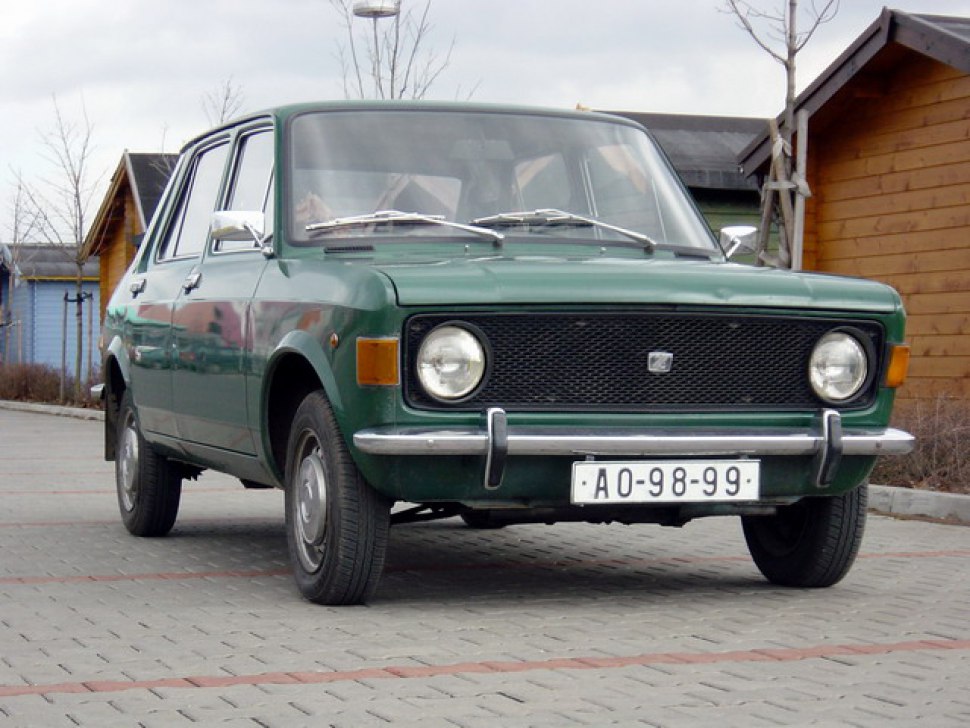
The Zastava 101, often referred to as the “Stojadin” (meaning “hundred” in Serbian) or the “Peglica” (meaning “iron” or “flat iron” due to its shape), was a small family car produced by the Serbian manufacturer Zastava from 1975 to 1993. It was a significant vehicle for the Yugoslavian automotive market, providing affordable transportation for a wide segment of the population. Based on the Fiat 128, the 101 underwent numerous revisions and updates during its long production run, becoming a cultural icon in the region. While never officially exported to the United States, the Zastava 101 represents a fascinating example of licensed production and adaptation of Italian automotive technology within the context of a socialist economy.
Zastava 101: A Yugoslavian Automotive Staple
The Zastava 101 emerged from a licensing agreement between Zastava Automobiles and Fiat in the early 1970s. The Fiat 128 served as the foundation, but Zastava implemented substantial modifications to suit local conditions, manufacturing capabilities, and consumer preferences. The 101 was initially available with a 1.1-liter engine, designated the 1100 model, and quickly became the mainstay of Zastava’s production. It filled a crucial niche in the Yugoslavian market, offering a practical and relatively modern vehicle at a price point accessible to many. The car’s longevity – nearly two decades in production – speaks to its enduring popularity and the limited availability of alternatives within the country.
Engine & Performance
The Zastava 101 1.1, as the name suggests, was powered by an 1116 cc (68.1 cu. in.) inline four-cylinder engine. This engine, designated 128.A064, produced 56 horsepower at 6600 rpm and 79 Nm (58.27 lb.-ft.) of torque. While not a performance car by any means, the engine provided adequate power for everyday driving. The engine featured a single overhead camshaft (SOHC) valvetrain and utilized a carburetor for fuel delivery. The power-to-weight ratio of 14.6 kg/Hp and torque-to-weight ratio of 10.4 kg/Nm contributed to reasonable, if uninspiring, acceleration. The 101 could reach a top speed of 135 km/h (83.89 mph). Acceleration from 0 to 100 km/h (0-62 mph) took approximately 16 seconds, while 0 to 60 mph was achieved in around 15.2 seconds. Fuel economy was a strong point, with combined cycle consumption rated at 7 l/100 km (33.6 US mpg, 40.4 UK mpg, 14.3 km/l).
Design & Features
The Zastava 101 was a three or five-door hatchback, offering a relatively spacious interior for its size. The design, heavily influenced by the Fiat 128, was functional rather than flamboyant. Early models featured a distinctive, boxy silhouette. Over the years, minor cosmetic updates were implemented, including changes to the grille, headlights, and interior trim. The car seated five passengers and offered a fuel tank capacity of 39 liters (10.3 US gal, 8.58 UK gal). Safety features were rudimentary by modern standards, reflecting the era in which the car was designed. The 101 featured disc brakes on the front wheels and drum brakes on the rear. Suspension consisted of an independent McPherson strut setup at the front and an independent trapezoidal lever arrangement at the rear. The car rode on 13-inch wheels with 145/80 SR13 tires.
Technical Specifications
| Brand | Zastava |
| Model | 101 (1100) |
| Generation | 101 (1100) |
| Type (Engine) | 1.1 (56 Hp) |
| Start of production | 1975 |
| End of production | 1993 |
| Powertrain Architecture | Internal Combustion engine |
| Body type | Hatchback |
| Seats | 5 |
| Doors | 3/5 |
| Fuel consumption (urban) | 8 l/100 km (29.4 US mpg, 35.3 UK mpg, 12.5 km/l) |
| Fuel consumption (extra urban) | 6.5 l/100 km (36.2 US mpg, 43.5 UK mpg, 15.4 km/l) |
| Fuel consumption (combined) | 7 l/100 km (33.6 US mpg, 40.4 UK mpg, 14.3 km/l) |
| Fuel Type | Petrol (Gasoline) |
| Acceleration 0 – 100 km/h | 16 sec |
| Acceleration 0 – 62 mph | 16 sec |
| Acceleration 0 – 60 mph | 15.2 sec |
| Maximum speed | 135 km/h (83.89 mph) |
| Weight-to-power ratio | 14.6 kg/Hp |
| Weight-to-torque ratio | 10.4 kg/Nm |
| Power | 56 Hp @ 6600 rpm |
| Torque | 79 Nm (58.27 lb.-ft.) |
| Engine layout | Front, Transverse |
| Engine Model/Code | 128.A064 |
| Engine displacement | 1116 cm3 (68.1 cu. in.) |
| Number of cylinders | 4 |
| Engine configuration | Inline |
| Cylinder Bore | 80 mm (3.15 in.) |
| Piston Stroke | 55.5 mm (2.19 in.) |
| Compression ratio | 9.2:1 |
| Number of valves per cylinder | 2 |
| Fuel injection system | Carburettor |
| Engine aspiration | Naturally aspirated |
| Valvetrain | SOHC |
| Kerb Weight | 820 kg (1807.79 lbs.) |
| Fuel tank capacity | 39 l (10.3 US gal, 8.58 UK gal) |
| Length | 3890 mm (153.15 in.) |
| Width | 1590 mm (62.6 in.) |
| Height | 1345 mm (52.95 in.) |
| Wheelbase | 2440 mm (96.06 in.) |
| Front track | 1300 mm (51.18 in.) |
| Rear track | 1310 mm (51.57 in.) |
| Minimum turning circle | 10 m (32.81 ft.) |
| Drivetrain Architecture | Front wheel drive |
| Number of gears | 4 gears, manual transmission +1 |
| Front suspension | Independent type McPherson |
| Rear suspension | Independent on trapezoidal lever |
| Front brakes | Disc |
| Rear brakes | Drum |
| Tires size | 145/80 SR13 |
| Wheel rims size | 13 |
The Zastava 101, despite its humble origins and relatively basic specifications, holds a significant place in the automotive history of the former Yugoslavia. It provided affordable and reliable transportation for a generation, and its enduring presence on the roads serves as a reminder of a bygone era.
