
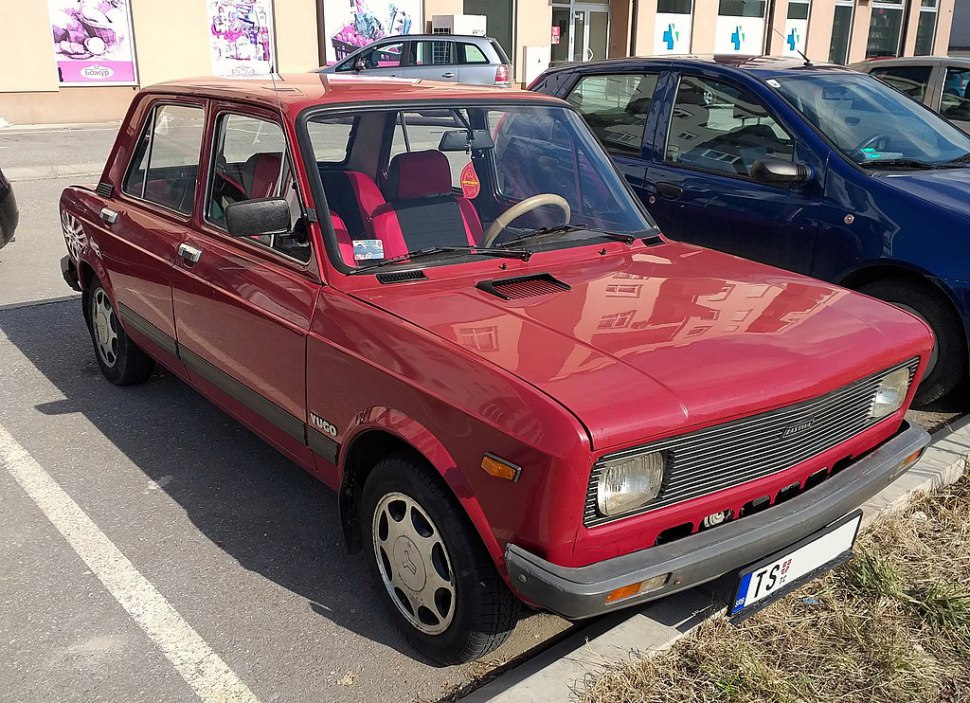
The Zastava 128 Skala 1.1 is a small, front-wheel-drive hatchback produced by the Serbian manufacturer Zastava from 1984 to 1995. A significant vehicle in the Yugoslavian automotive market, the Skala was based on the Fiat 128, a design originally licensed from Italy in the late 1960s. The 128 Skala represented a modernization of the original 128, offering increased practicality with its five-door hatchback configuration and a slightly larger engine. While never officially sold in the United States, the Zastava 128 Skala played a crucial role in providing affordable transportation for a generation of drivers in the Balkans, and remains a notable example of licensed automotive production during the Cold War era.
Zastava 128 Skala: A Legacy of Licensed Production
The Zastava 128 Skala’s origins are deeply rooted in the post-World War II industrialization of Yugoslavia. Seeking to modernize its automotive industry, the Yugoslav government entered into a licensing agreement with Fiat in 1960, allowing Zastava to produce the Fiat 600. This partnership continued with the Fiat 128 in the late 1960s, which became the foundation for Zastava’s most successful model line. The Skala, introduced in 1984, was a further evolution of this platform, designed to offer a more contemporary and practical vehicle for the evolving needs of the Yugoslavian market. The “Skala” name itself translates to “scale” or “dimension” in Serbian, hinting at the car’s intended role as a versatile and adaptable vehicle.
Engine & Performance
The Zastava 128 Skala 1.1 is powered by an inline four-cylinder, naturally aspirated gasoline engine with a displacement of 1116 cubic centimeters (68.1 cubic inches). This engine produces 54 horsepower at 6000 rpm and 78 Newton-meters (57.53 lb.-ft.) of torque at 3000 rpm. While not a performance car by modern standards, the 1.1-liter engine provided adequate power for everyday driving in the region. The engine featured a carburetor fuel injection system, common for vehicles of its era. Power is delivered to the front wheels through a five-speed manual transmission. Performance figures include a 0-100 km/h (0-62 mph) acceleration time of approximately 20 seconds and a top speed of 135 km/h (83.89 mph). The weight-to-power ratio is 15.4 kg/Hp, and the weight-to-torque ratio is 10.6 kg/Nm.
Design & Features
The Zastava 128 Skala is a five-door hatchback, offering a practical and relatively spacious interior for its size. It seats five passengers and provides a trunk capacity ranging from 325 liters (11.48 cubic feet) with the rear seats up to 1010 liters (35.67 cubic feet) with the rear seats folded down. The car’s design, while based on the original Fiat 128, incorporates subtle styling updates to give it a more modern appearance. Safety features were relatively basic by today’s standards, but the Skala did include disc brakes on the front wheels and drum brakes on the rear. Later models were equipped with an Anti-lock braking system (ABS). The steering system utilizes a steering rack and pinion for improved handling. The vehicle rides on 145/80 R13 tires. The Skala’s simple, robust construction and relatively low maintenance requirements made it a popular choice for drivers in Yugoslavia and surrounding countries.
Technical Specifications
| Brand | Zastava |
| Model | 128 Skala |
| Generation | 128 Skala |
| Type (Engine) | 1.1 (54 Hp) |
| Start of production | 1984 |
| End of production | 1995 |
| Powertrain Architecture | Internal Combustion engine |
| Body type | Hatchback |
| Seats | 5 |
| Doors | 5 |
| Fuel Type | Petrol (Gasoline) |
| Acceleration 0 – 100 km/h | 20 sec |
| Acceleration 0 – 62 mph | 20 sec |
| Acceleration 0 – 60 mph | 19 sec |
| Maximum speed | 135 km/h / 83.89 mph |
| Weight-to-power ratio | 15.4 kg/Hp, 65.1 Hp/tonne |
| Weight-to-torque ratio | 10.6 kg/Nm, 94 Nm/tonne |
| Power | 54 Hp @ 6000 rpm |
| Power per litre | 48.4 Hp/l |
| Torque | 78 Nm @ 3000 rpm / 57.53 lb.-ft. @ 3000 rpm |
| Engine layout | Front, Transverse |
| Engine displacement | 1116 cm3 / 68.1 cu. in. |
| Number of cylinders | 4 |
| Engine configuration | Inline |
| Cylinder Bore | 80 mm / 3.15 in. |
| Piston Stroke | 55.5 mm / 2.19 in. |
| Compression ratio | 9.2:1 |
| Number of valves per cylinder | 2 |
| Fuel injection system | Carburettor |
| Engine aspiration | Naturally aspirated engine |
| Kerb Weight | 830 kg / 1829.84 lbs |
| Max. weight | 1235 kg / 2722.71 lbs |
| Max load | 405 kg / 892.87 lbs |
| Trunk (boot) space – minimum | 325 l / 11.48 cu. ft. |
| Trunk (boot) space – maximum | 1010 l / 35.67 cu. ft. |
| Fuel tank capacity | 36 l / 9.51 US gal | 7.92 UK gal |
| Length | 3840 mm / 151.18 in. |
| Width | 1590 mm / 62.6 in. |
| Height | 1350 mm / 53.15 in. |
| Wheelbase | 2450 mm / 96.46 in. |
| Front track | 1310 mm / 51.57 in. |
| Rear (Back) track | 1315 mm / 51.77 in. |
| Drivetrain Architecture | The Internal combustion engine (ICE) drives the front wheels of the vehicle. |
| Drive wheel | Front wheel drive |
| Number of gears and type of gearbox | 5 gears, manual transmission |
| Front suspension | Coil spring |
| Rear suspension | Coil spring |
| Front brakes | Disc |
| Rear brakes | Drum |
| Assisting systems | ABS (Anti-lock braking system) |
| Steering type | Steering rack and pinion |
| Tires size | 145/80 R13 |
The Zastava 128 Skala, while a product of licensed technology, became a symbol of Yugoslavian automotive engineering and a vital part of the country’s transportation infrastructure. Its enduring popularity and simple design continue to make it a recognizable and appreciated vehicle among enthusiasts and collectors in the region.
