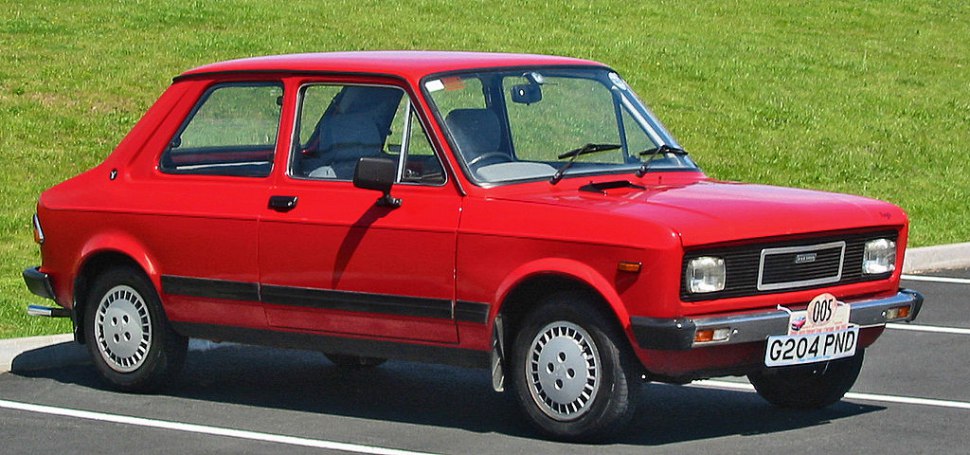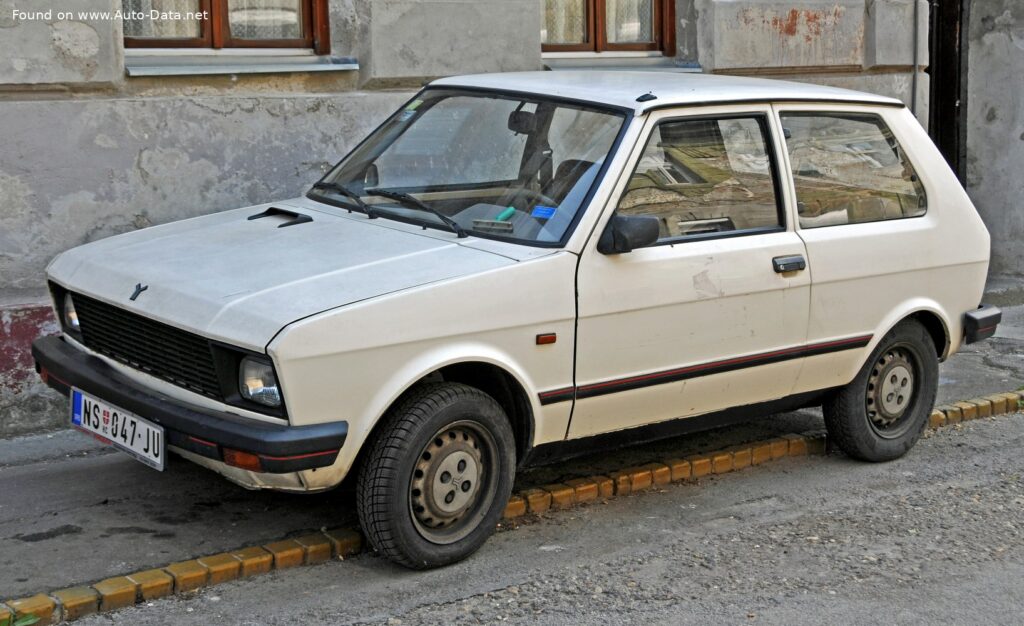
The Zastava Yugo Florida 1.1, producing 60 horsepower, was a mainstay of the Yugo Florida range from its introduction in 1990 until production ceased in 2008. Representing the entry-level variant of the Florida, it was designed to offer affordable transportation to a broad market, particularly in Eastern Europe and as an export model to Western countries. The Florida itself was a significant update to the original Yugo, offering a more modern design and improved features while retaining the core principles of simplicity and low cost. This 1.1-liter model occupied the bottom rung of the Florida lineup, positioned below the 1.3 and 1.5-liter versions, and served as the most accessible option for budget-conscious buyers.
Powertrain & Engine Architecture
The heart of the Yugo Florida 1.1 was the Zastava 702 engine, a 1116 cc (68.1 cu in) inline-four cylinder petrol engine. This engine, derived from the Fiat 127 engine, featured a cast iron block and an aluminum cylinder head. It utilized a single overhead camshaft (SOHC) valvetrain with two valves per cylinder. Critically, the 1.1-liter engine employed a carburetor for fuel delivery, a cost-saving measure that distinguished it from the fuel-injected engines found in higher-spec Florida models. The carburetor, typically a Zastava-produced unit based on Solex designs, provided adequate but not particularly refined fuel atomization.
The engine produced a maximum power output of 60 hp (44 kW) at 6400 rpm and 80 Nm (59 lb-ft) of torque at 3800 rpm. This modest output was coupled with a five-speed manual transmission, the only gearbox option available for this variant. The transmission was a standard, fully synchronized unit, designed for durability rather than sporty performance. The engine’s transverse front-wheel-drive layout was a common configuration for economy cars of the era, maximizing interior space and improving packaging efficiency.
Engine Codes & Variations
While the core engine architecture remained consistent throughout the production run, minor variations existed. Early models (1990-1993) often featured slightly different carburetor calibrations compared to later iterations. These adjustments were made to comply with evolving emissions regulations and to optimize engine performance. However, the fundamental design and specifications of the 702 engine remained largely unchanged.
Driving Characteristics
The Yugo Florida 1.1’s driving experience was defined by its modest power output and focus on practicality. Acceleration was slow, with a 0-60 mph (0-97 km/h) time of approximately 15.7 seconds and a 0-100 km/h time of 16.5 seconds. Top speed was limited to around 93 mph (150 km/h). The five-speed manual transmission helped to keep the engine within its optimal operating range, but frequent downshifts were necessary for overtaking or climbing hills. The gear ratios were relatively tall, prioritizing fuel economy over outright performance.
Compared to the 1.3 and 1.5-liter Florida models, the 1.1 felt noticeably underpowered. The larger engines offered significantly improved acceleration and cruising ability, making them more suitable for highway driving. However, the 1.1’s lighter weight (910 kg / 2006 lbs) and simple mechanicals contributed to a nimble and relatively easy-to-drive character in urban environments. The suspension, while basic, provided a reasonably comfortable ride on smooth roads.
Equipment & Trim Levels
The Yugo Florida 1.1 was typically equipped with a basic level of standard features. Interior appointments were spartan, with cloth upholstery and a simple dashboard layout. Standard equipment generally included front bucket seats, a rear bench seat, and basic instrumentation (speedometer, fuel gauge, temperature gauge). Power steering and air conditioning were not typically offered on the 1.1 model, although they could sometimes be found as rare factory options or aftermarket additions.
Optional extras for the 1.1 included upgraded audio systems, wheel covers, and tinted glass. The exterior trim was minimal, with black plastic bumpers and side moldings. The overall emphasis was on providing a functional and affordable vehicle, rather than a luxurious or feature-rich one.
Chassis & Braking
The Yugo Florida 1.1 utilized a relatively simple chassis design. The front suspension consisted of coil springs and independent wishbones, while the rear suspension employed a twist-beam axle with coil springs. This setup provided a reasonable balance between ride comfort and handling. The steering was a rack-and-pinion system, offering light and responsive steering feel.
Braking was provided by disc brakes on the front wheels and drum brakes on the rear wheels. The braking system was adequate for normal driving conditions, but lacked the stopping power of more modern vehicles. Anti-lock braking system (ABS) was not standard equipment on the 1.1 model, although it was available as an option on some later versions. The tires were typically 165/70 R13, reflecting the car’s modest performance capabilities.
Market Reception & Comparison
The Yugo Florida 1.1 was generally well-received as an exceptionally affordable car, particularly in markets where price was a primary consideration. Critics often praised its low purchase price and relatively fuel-efficient engine. However, it was also criticized for its slow performance, basic interior, and perceived lack of refinement. Compared to other economy cars of the era, such as the Renault 5 or the Fiat Panda, the Yugo Florida 1.1 offered a similar level of practicality but often at a lower price point.
Fuel economy was a strong point for the 1.1, with combined cycle figures typically ranging from 5.5 to 6.5 liters per 100 kilometers (43 to 36 mpg US). Reliability was generally good, although the carburetor-based fuel system required periodic maintenance and adjustment. The 1.3 and 1.5-liter Florida models offered better performance and refinement, but at a higher cost.
Technical Specifications
| Body Type | Hatchback, 5 Doors, 5 Seats |
| Engine Displacement | 1116 cm3 (68.1 cu in) |
| Engine Configuration | Inline-4, Naturally Aspirated |
| Fuel Type | Petrol (Gasoline) |
| Power Output | 60 hp (44 kW) @ 6400 rpm |
| Torque Output | 80 Nm (59 lb-ft) @ 3800 rpm |
| Compression Ratio | 9.2:1 |
| Fuel Injection System | Carburetor |
| Transmission | 5-Speed Manual |
| Drive Wheels | Front Wheel Drive |
| Kerb Weight | 910 kg (2006 lbs) |
| Maximum Speed | 150 km/h (93 mph) |
| 0-60 mph | 15.7 sec |
| 0-100 km/h | 16.5 sec |
| Fuel Tank Capacity | 48 liters (12.68 US gal) |
| Trunk Space (min/max) | 410 – 1180 liters (14.48 – 41.67 cu ft) |
| Dimensions (L x W x H) | 3930 x 1660 x 1410 mm (154.72 x 65.35 x 55.51 in) |
Legacy
The Zastava Yugo Florida 1.1, while not renowned for its performance or luxury, holds a significant place in automotive history as a symbol of affordable transportation. Its simple design and robust mechanicals contributed to its longevity, and many examples remain on the road today. The 702 engine, while outdated by modern standards, proved to be relatively reliable and easy to maintain. In the used car market, the Florida 1.1 remains a popular choice for budget-conscious buyers and those seeking a classic, no-frills vehicle. Its low running costs and readily available spare parts contribute to its continued appeal. However, potential buyers should be aware of the age-related issues common to older vehicles, such as corrosion and wear and tear on rubber components.