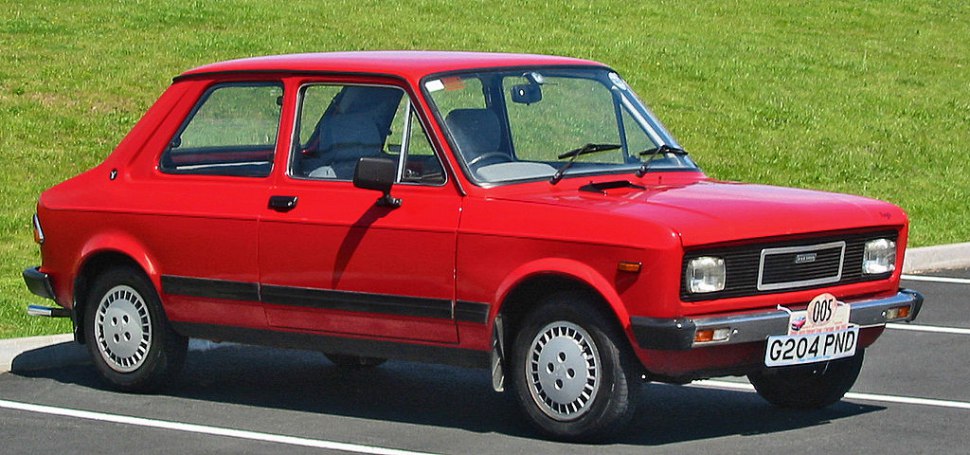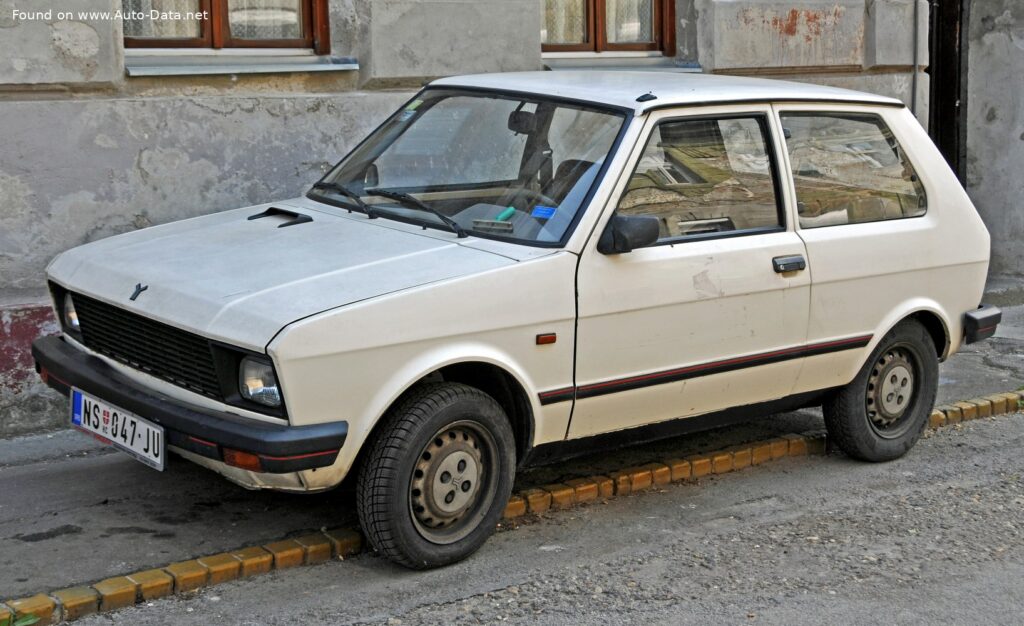
The Zastava Yugo Florida 1.3 i (68 hp) was a subcompact hatchback produced by the Serbian manufacturer Zastava Automobiles from 2003 to 2008. It represented a continuation of the Yugo Florida line, which itself was a modernized derivative of the original Yugo GV, built under license from Fiat. This 1.3-liter variant occupied the entry-level position within the Florida range, offering a more affordable option compared to the later 1.4-liter models. The Florida, and specifically this 1.3i version, aimed to provide basic, economical transportation for the domestic Yugoslavian and Serbian markets, and to a lesser extent, export markets in Eastern Europe.
Powertrain & Engine Architecture
The heart of the Yugo Florida 1.3 i was the Zastava 702 inline-four cylinder gasoline engine. This engine, displacing 1299 cc (79.27 cubic inches), was a relatively simple design, based on the Fiat 127 engine. It featured a cast iron block and cylinder head, with a single overhead camshaft operating two valves per cylinder. Fuel delivery was managed by a multi-port fuel injection system, a significant upgrade from the carburetor systems found in earlier Yugo models. The engine produced a maximum power output of 68 horsepower (51 kW) at 5500 rpm and 100 Nm (73.76 lb-ft) of torque at 3800 rpm. This resulted in a power-to-liter ratio of 52.3 hp/l.
The 1.3 i was exclusively paired with a five-speed manual transmission. This transmission was a standard, non-synchronized unit, designed for durability and simplicity rather than sporty performance. The gearbox featured a relatively wide spread of ratios, geared towards maximizing fuel economy and providing adequate acceleration in everyday driving conditions. There was no automatic transmission option available for this specific engine and trim level.
Engine Codes and Variations
While generally consistent throughout its production run, minor variations in engine management systems and components may have occurred. However, the core engine architecture remained largely unchanged. The engine was designed to run on 91 octane unleaded gasoline, though it could tolerate lower octane fuels with a slight reduction in performance.
Driving Characteristics
The Yugo Florida 1.3 i offered modest performance. Acceleration from 0 to 100 km/h (0 to 62 mph) took approximately 15 seconds, while 0 to 60 mph was achieved in around 14.3 seconds. The top speed was rated at 157 km/h (97.56 mph). The engine’s torque peak at 3800 rpm meant that usable power was available across a relatively narrow band. The five-speed manual transmission allowed drivers to keep the engine within this optimal range, but frequent shifting was often necessary, particularly when overtaking or climbing hills.
The driving experience was characterized by its light steering and relatively soft suspension. This made the Florida easy to maneuver in urban environments, but it also resulted in noticeable body roll during cornering. Compared to potential higher-output versions (had they existed), the 1.3 i prioritized fuel efficiency and affordability over outright performance. The lack of power meant that highway driving could be a strain, especially when fully loaded.
Equipment & Trim Levels
The Yugo Florida 1.3 i was typically equipped with basic amenities. Standard features generally included cloth upholstery, a simple dashboard layout with analog gauges, and manual windows and door locks. Power steering was not typically standard, though it may have been offered as an optional extra. Air conditioning was also often an optional upgrade. The interior plastics were of relatively low quality, reflecting the car’s budget-oriented positioning.
Trim levels were limited. The 1.3 i generally represented the base model, with minimal additional features. Optional extras could include a radio/cassette player, upgraded seat fabrics, and occasionally, central locking. The focus was on providing a functional and affordable vehicle, rather than luxury or advanced features.
Chassis & Braking
The Yugo Florida utilized a front-engine, front-wheel-drive layout. The chassis consisted of a monocoque body structure. Suspension was handled by coil springs and shock absorbers at all four wheels. The front suspension featured independent coil springs, while the rear suspension employed a semi-independent twist beam setup. This configuration provided a reasonable ride quality, but it was not particularly sophisticated.
Braking duties were handled by disc brakes at the front and drum brakes at the rear. The braking system was not equipped with ABS (Anti-lock Braking System) as standard, although it may have been offered as an optional extra on some models. Steering was provided by a rack and pinion system, offering relatively light and direct steering feel. The standard tire size was 165/70 R13.
Market Reception & Comparison
The Yugo Florida 1.3 i was primarily targeted at budget-conscious buyers in the Serbian and surrounding markets. It was often seen as a practical and affordable option for first-time car owners or those needing a basic mode of transportation. Critics generally acknowledged its low price point but also pointed out its lack of refinement, limited performance, and basic safety features. Compared to Western European or Japanese competitors, the Florida 1.3 i was significantly less sophisticated.
Within the Yugo Florida lineup, the 1.3 i represented the entry point. Later 1.4-liter models offered improved performance and slightly more features, but at a higher price. The 1.3 i’s fuel economy was a key selling point, offering reasonable consumption for its class. Reliability was generally considered acceptable, although the car’s age and the quality of components could vary.
Technical Specifications
| Body Type | Hatchback, 5 Doors, 5 Seats |
| Engine Displacement | 1299 cm3 (79.27 cu. in.) |
| Engine Configuration | Inline-4 |
| Fuel Type | Petrol (Gasoline) |
| Power Output | 68 hp @ 5500 rpm |
| Torque | 100 Nm (73.76 lb-ft) @ 3800 rpm |
| Compression Ratio | 9.1:1 |
| Fuel Injection | Multi-port Fuel Injection |
| Transmission | 5-speed Manual |
| Drive Wheels | Front Wheel Drive |
| Kerb Weight | 950 kg (2094.39 lbs) |
| Maximum Weight | 1420 kg (3130.56 lbs) |
| Fuel Tank Capacity | 48 l (12.68 US gal | 10.56 UK gal) |
| Dimensions (L x W x H) | 4030 mm x 1658 mm x 1428 mm (158.66 in x 65.28 in x 56.22 in) |
| 0-100 km/h | 15 sec |
| Top Speed | 157 km/h (97.56 mph) |
Legacy
The Zastava Yugo Florida 1.3 i, while not a groundbreaking vehicle, played a significant role in providing affordable transportation in the former Yugoslavia and Serbia during a period of economic hardship. Today, the Florida 1.3 i is a relatively rare sight on the roads, with many examples having succumbed to age, rust, or accidents. However, a small but dedicated following of enthusiasts maintains and restores these cars, appreciating their simplicity, affordability, and nostalgic value. The 702 engine, while basic, proved to be reasonably durable, and spare parts are still occasionally available. The Yugo Florida 1.3 i remains a symbol of a bygone era in automotive history, representing a time when basic, functional transportation was prioritized over luxury and performance.