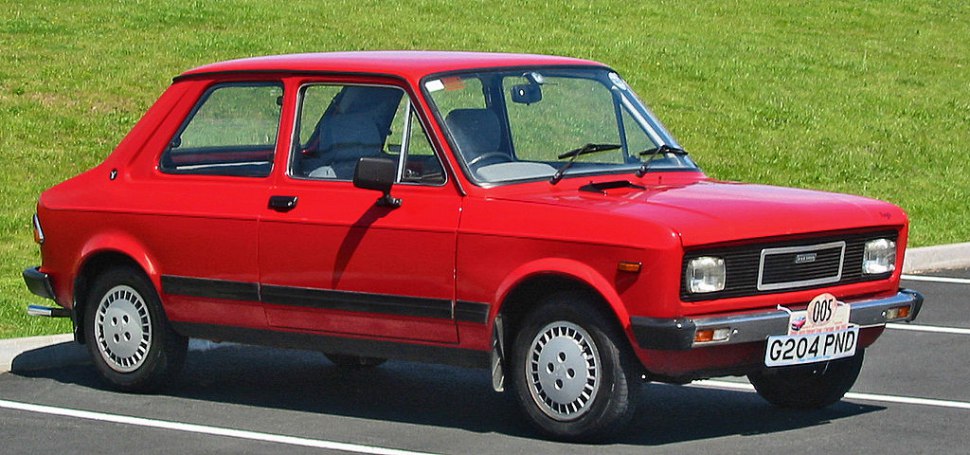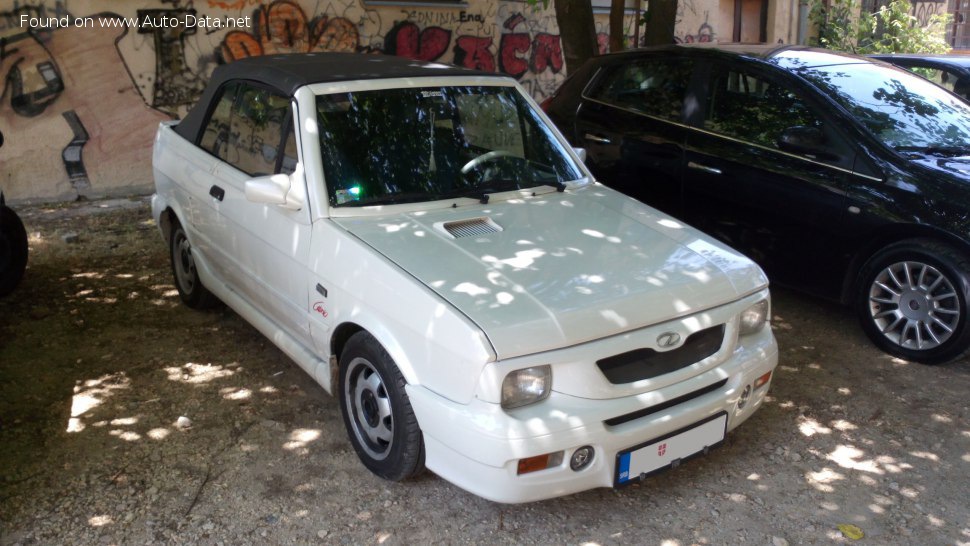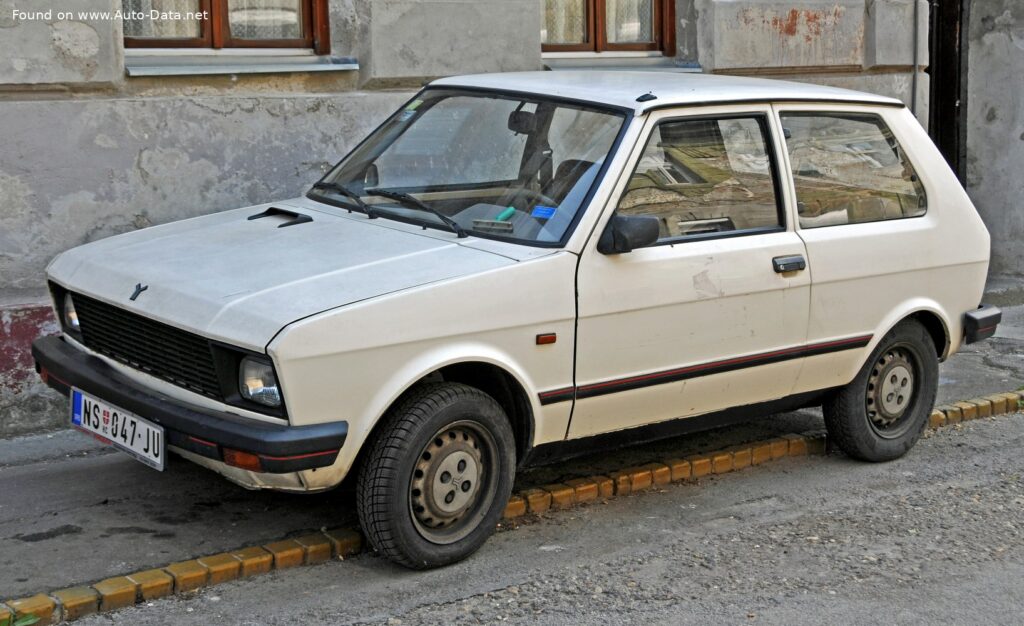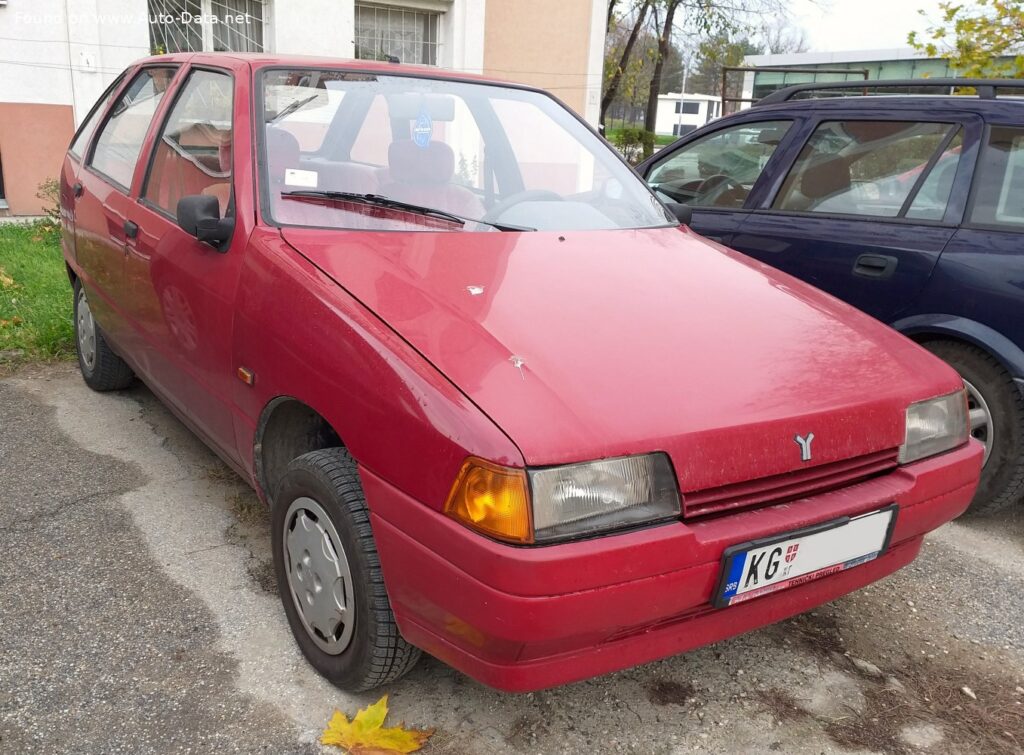
The Zastava Yugo Florida 1.6 i (95 hp) was a hatchback produced by the Serbian manufacturer Zastava Automobiles from 2003 to 2008. It represented a significant update to the original Yugo line, offering improved styling, a more modern interior, and a larger engine option. The Florida 1.6 i occupied a mid-range position within the Florida lineup, positioned above the base 1.4 models but below any potential future performance variants that never materialized. It was built upon the foundation of the original Yugo platform, a license-built version of the Fiat 127, but with substantial modifications over its decades-long production run. The Florida aimed to provide affordable transportation with a degree of practicality and, with the 1.6i engine, a more acceptable level of performance for contemporary driving conditions.
Powertrain & Engine Architecture
The heart of the Yugo Florida 1.6 i was the Zastava 702 inline-four cylinder gasoline engine. Displacing 1587 cc (96.84 cubic inches), this engine produced 95 horsepower at 5700 rpm and 136 Nm (100.31 lb-ft) of torque at 3500 rpm. The engine featured a naturally aspirated configuration with multi-port fuel injection, a significant upgrade from the carburetor systems found in earlier Yugo models. It utilized a two-valve per cylinder (SOHC) valvetrain and a compression ratio of 10.5:1. The engine was transversely mounted at the front of the vehicle, driving the front wheels.
While a five-speed manual transmission was the standard offering, the focus of this article is the variant paired with a four-speed automatic transmission. This automatic, sourced from various suppliers over the production run, was a relatively simple hydraulic unit. It wasn’t known for its responsiveness or fuel efficiency, but it provided a level of convenience that appealed to a segment of the market. The gear ratios were geared towards economy rather than performance, with a relatively tall final drive. The automatic transmission contributed to a slightly slower 0-60 mph time compared to the manual version, but offered a smoother driving experience in urban environments.
Engine Codes & Variations
The 1.6-liter engine was primarily identified by its engine code, though variations existed depending on the year of manufacture. While specific codes are difficult to definitively pinpoint due to limited documentation, the engine represented a consistent evolution of the Zastava-built Fiat-derived powerplant. The fuel injection system was a key upgrade, improving emissions and driveability compared to earlier carbureted versions. The engine’s design, while dated, was relatively robust and capable of high mileage with proper maintenance.
Driving Characteristics
The Yugo Florida 1.6 i with the automatic transmission offered a modest driving experience. Acceleration from 0-62 mph (0-100 km/h) took approximately 11.5 seconds, and top speed was around 108.74 mph (175 km/h). The automatic transmission, while convenient, noticeably impacted performance. The engine felt strained during hard acceleration, and the transmission was slow to downshift. The gear ratios were optimized for fuel economy, resulting in a somewhat lethargic feel. Compared to the five-speed manual version, the automatic was demonstrably slower, but it provided a more relaxed driving experience, particularly in city traffic.
Handling was adequate, but not particularly engaging. The suspension, consisting of coil springs all around, provided a reasonably comfortable ride, but body roll was noticeable in corners. Steering was via a rack and pinion system, offering acceptable precision, but lacked feedback. The car’s relatively light weight (approximately 2204.62 lbs / 1000 kg) helped to mitigate some of the performance shortcomings, making it feel more nimble than its specifications might suggest.
Equipment & Trim Levels
The Yugo Florida 1.6 i, even in its automatic guise, was a budget-oriented vehicle. Standard equipment typically included basic cloth upholstery, a simple dashboard layout, and manual windows and door locks. Air conditioning was often an optional extra, as were power steering and a basic audio system. The interior plastics were of low quality, reflecting the car’s price point. Safety features were also minimal, typically consisting of seatbelts and, in later models, an Anti-lock Braking System (ABS). The trim level was generally consistent across the 1.6i models, with limited options for customization beyond the aforementioned extras.
The dashboard layout was functional but spartan, with a basic instrument cluster displaying speed, fuel level, and engine temperature. The center console typically housed the radio (if equipped) and basic ventilation controls. Interior space was surprisingly good for a car of its size, offering comfortable seating for five passengers. The rear seats could be folded down to increase cargo capacity.
Chassis & Braking
The Yugo Florida 1.6 i utilized a relatively simple chassis design. The front suspension consisted of coil springs and independent suspension components, while the rear suspension employed a twist-beam axle with coil springs. The braking system featured disc brakes at the front and drum brakes at the rear. ABS was introduced on later models, improving braking performance and safety. The tires were typically 165/70 R13, reflecting the car’s modest performance capabilities. The car’s light weight contributed to acceptable braking distances, but the drum brakes at the rear limited overall stopping power.
The steering system was a rack and pinion setup, providing reasonable steering precision. However, the steering lacked power assistance in many models, requiring more effort at low speeds. The car’s relatively narrow track width contributed to a somewhat unstable feel at higher speeds.
Market Reception & Comparison
The Yugo Florida 1.6 i, particularly with the automatic transmission, received mixed reviews. Critics generally praised its affordability and practicality, but criticized its lack of performance and refinement. The automatic transmission was often singled out for its sluggishness and inefficiency. Compared to other vehicles in its class, such as the Renault Clio or Peugeot 206, the Yugo Florida 1.6 i offered less power, fewer features, and a lower level of build quality. However, it was significantly cheaper, making it an attractive option for budget-conscious buyers.
Fuel economy was reasonable, but not exceptional, averaging around 30-35 mpg in mixed driving conditions. Reliability was generally good, but the car’s dated design and low-quality components meant that it required regular maintenance. The 1.6i engine was generally considered more reliable than the smaller 1.4-liter engine, but the automatic transmission was a potential weak point.
Technical Specifications
| Body Type | Hatchback, 5 Doors, 5 Seats |
| Engine Displacement | 1.6 l / 1587 cm3 / 96.84 cu. in. |
| Engine Configuration | Inline 4 |
| Number of Cylinders | 4 |
| Power | 95 Hp @ 5700 rpm |
| Torque | 136 Nm @ 3500 rpm / 100.31 lb.-ft. @ 3500 rpm |
| Fuel Type | Petrol (Gasoline) |
| Fuel Injection | Multi-port manifold injection |
| Compression Ratio | 10.5:1 |
| Transmission | 4-speed Automatic |
| Drive Wheels | Front Wheel Drive |
| Acceleration 0-60 mph | 10.9 sec (Calculated) |
| Acceleration 0-62 mph | 11.5 sec |
| Maximum Speed | 175 km/h / 108.74 mph |
| Kerb Weight | 1000 kg / 2204.62 lbs |
| Max. Weight | 1400 kg / 3086.47 lbs |
| Fuel Tank Capacity | 45 l / 11.89 US gal | 9.9 UK gal |
| Trunk (boot) space – minimum | 410 l / 14.48 cu. ft. |
| Trunk (boot) space – maximum | 1280 l / 45.2 cu. ft. |
| Dimensions (Length x Width x Height) | 4030 mm x 1658 mm x 1428 mm / 158.66 in. x 65.28 in. x 56.22 in. |
Legacy
The Zastava Yugo Florida 1.6 i, while not a groundbreaking vehicle, holds a unique place in automotive history. It represented a final attempt to modernize a dated platform and offer affordable transportation to a wider audience. The 1.6-liter engine, while not particularly powerful, was relatively reliable and capable of providing years of service. The automatic transmission, however, remains a point of criticism. Today, the Yugo Florida 1.6 i is a relatively rare sight on the roads, but it has gained a cult following among enthusiasts who appreciate its simplicity, affordability, and quirky charm. Parts availability can be challenging, but the car’s robust construction and relatively simple mechanics make it a viable project for dedicated owners. In the used car market, these vehicles command very low prices, often serving as inexpensive transportation for those seeking a basic and reliable vehicle.