
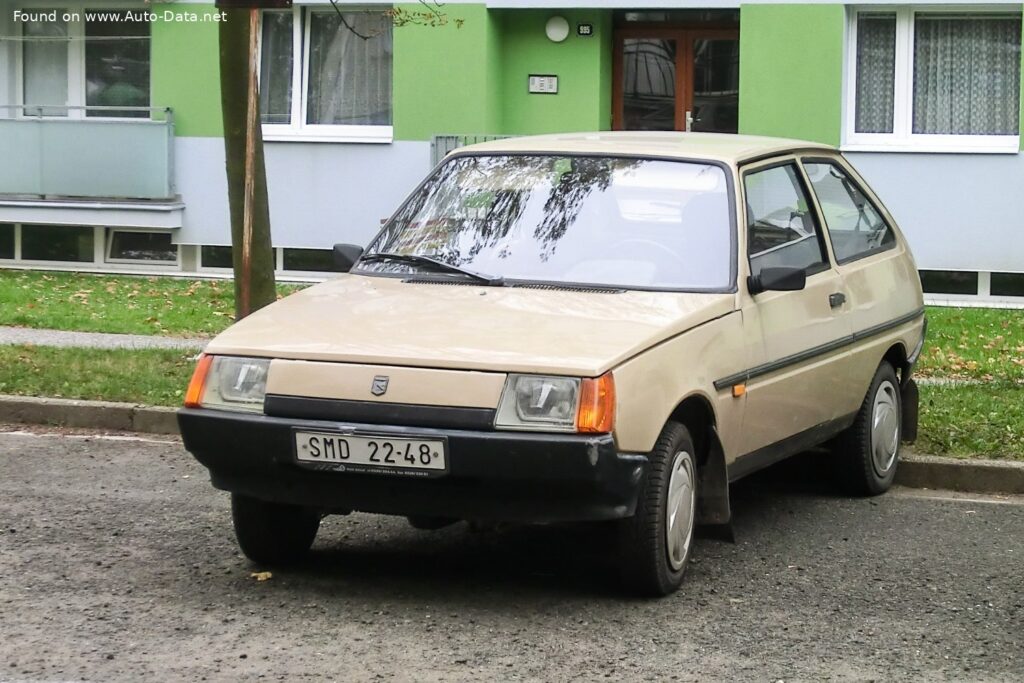
The ZAZ 1102, often referred to as the “Danubiana,” was a small, front-wheel-drive hatchback produced by the Ukrainian automobile manufacturer ZAZ (Zaporizhzhia Automobile Building Plant) from 1987 to 2007. It represented a significant modernization of the earlier ZAZ 968 series, adopting a more contemporary design and improved mechanical components. The 1.1-liter, 53 horsepower variant was a mainstay of the lineup throughout much of its production run, serving as the entry-level model and appealing to budget-conscious buyers. The 1102 was built on a modified version of the original 968 platform, though with substantial changes to the body and interior. It was intended to be a more practical and efficient vehicle for everyday use in the Soviet Union and, later, independent Ukraine.
ZAZ 1102 1.1: Positioning and Overview
The 1.1-liter engine option was the base trim level for the ZAZ 1102. It was positioned as the most affordable and accessible version of the car, targeting buyers who prioritized economy and basic transportation over performance. While more powerful engine options were briefly offered, the 1.1L remained the most common variant produced and sold. The Danubiana aimed to provide a modern, albeit basic, alternative to the aging ZAZ 968 and other small, domestically produced vehicles. Its front-wheel-drive layout and hatchback body style were relatively modern for the time in the Eastern European automotive landscape.
Powertrain & Engine Architecture
The heart of the ZAZ 1102 1.1 was the MeMZ-245 engine, a 1091cc (66.58 cubic inches) inline-four cylinder gasoline engine. This engine produced 53 horsepower at 5500 rpm and 80 Nm (59 lb-ft) of torque at 3500 rpm. The engine featured a relatively low compression ratio of 9.5:1 and utilized a single overhead camshaft (OHC) valvetrain with two valves per cylinder. Critically, the 1.1L engine employed a carburetor fuel injection system, a technology that was becoming increasingly outdated in Western markets by the late 1980s and 1990s. This carburetor setup contributed to its relatively low fuel efficiency and higher emissions compared to more modern fuel injection systems. The engine was transversely mounted in the front of the vehicle, driving the front wheels.
The ZAZ 1102 1.1 was exclusively offered with a five-speed manual transmission. This transmission was designed to maximize fuel economy and provide adequate acceleration for the engine’s limited power output. The gear ratios were relatively tall, prioritizing fuel efficiency over rapid acceleration. The transmission was mechanically simple and generally reliable, though it could exhibit some stiffness in colder weather.
Driving Characteristics
The driving experience in a ZAZ 1102 1.1 was characterized by its modest performance. Acceleration was slow, particularly when fully loaded or climbing hills. The 0 to 60 mph time was estimated to be around 18-20 seconds. The car’s light weight (727 kg or 1602.76 lbs) helped to mitigate the effects of the low horsepower, but it was still noticeably underpowered compared to many contemporary vehicles. The five-speed manual transmission allowed drivers to keep the engine in its optimal power band, but frequent downshifting was often necessary for overtaking or maintaining speed on inclines. The front-wheel-drive layout provided reasonable handling in dry conditions, but traction could be limited in wet or snowy weather. The suspension, while simple, offered a reasonably comfortable ride on smooth roads, though it could become harsh on rough surfaces.
Equipment & Trim Levels
The ZAZ 1102 1.1 was typically equipped with a fairly basic level of standard features. The interior typically featured cloth upholstery, a simple dashboard layout with analog gauges, and manually operated windows and door locks. Heating and ventilation were standard, but air conditioning was not available, even as an option. The car’s interior space was relatively limited, offering adequate room for four adults, but with limited legroom in the rear seats. Optional extras were limited, but could include a radio, upgraded seat covers, and a rear window defroster. Later models sometimes featured minor cosmetic upgrades, such as improved dashboard trim or different wheel covers.
Chassis & Braking
The ZAZ 1102 utilized a relatively simple chassis design. The front suspension consisted of coil springs and independent suspension, while the rear suspension employed a semi-independent torsion beam setup with coil springs. This suspension configuration provided a reasonable balance between ride comfort and handling. The braking system consisted of disc brakes on the front wheels and drum brakes on the rear wheels. The braking performance was adequate for the car’s weight and performance, but lacked the stopping power of more modern vehicles. Some later models were equipped with an Anti-lock Braking System (ABS), but this was not a standard feature on the base 1.1L trim. The steering system was a rack and pinion setup, providing reasonably precise steering feel.
Market Reception & Comparison
The ZAZ 1102 1.1 was generally well-received in its target market, particularly in Ukraine and other former Soviet republics. It offered a relatively affordable and reliable means of transportation for budget-conscious buyers. However, it faced competition from imported used cars, which often offered more features and better performance. Compared to other trims in the ZAZ 1102 lineup (which briefly included a more powerful 1.3L engine), the 1.1L version offered the best fuel economy, but at the expense of performance. Critics often noted the car’s outdated carburetor fuel injection system and its relatively basic interior. Fuel economy was rated at approximately 6 liters per 100 kilometers (39.2 US mpg), which was reasonable for the time, but not exceptional. Reliability was generally good, but maintenance could be challenging due to the limited availability of spare parts.
Technical Specifications
| Body Type | Hatchback, 3 Doors, 5 Seats |
| Engine Displacement | 1.1 l (1091 cm3 / 66.58 cu. in.) |
| Engine Configuration | Inline-4 |
| Number of Cylinders | 4 |
| Fuel Type | Petrol (Gasoline) |
| Maximum Power | 53 Hp @ 5500 rpm |
| Maximum Torque | 80 Nm (59 lb.-ft.) @ 3500 rpm |
| Fuel Consumption (Combined) | 6 l/100 km (39.2 US mpg, 47.1 UK mpg, 16.7 km/l) |
| Maximum Speed | 148 km/h (91.96 mph) |
| Kerb Weight | 727 kg (1602.76 lbs) |
| Max. Weight | 1127 kg (2484.61 lbs) |
| Trunk (Boot) Space (Minimum) | 250 l (8.83 cu. ft.) |
| Fuel Tank Capacity | 39 l (10.3 US gal, 8.58 UK gal) |
| Dimensions (Length x Width x Height) | 3708 mm x 1554 mm x 1410 mm (145.98 in x 61.18 in x 55.51 in) |
| Wheelbase | 2320 mm (91.34 in) |
| Transmission | 5-speed Manual |
| Drive Type | Front Wheel Drive |
| Front Brakes | Disc |
| Rear Brakes | Drum |
| Tire Size | 155/70 R13S |
Legacy
The ZAZ 1102 1.1, while not a technologically advanced vehicle, holds a significant place in the automotive history of Ukraine and the former Soviet Union. Its simple design and relatively robust construction contributed to its longevity, and many examples remain on the road today, often maintained by enthusiasts. The 1.1L powertrain, while underpowered by modern standards, proved to be reasonably reliable and relatively easy to maintain. In the used car market, the ZAZ 1102 1.1 is typically valued as an affordable and practical classic car, appealing to those seeking a nostalgic driving experience or a simple, inexpensive means of transportation. Its affordability and readily available spare parts (though increasingly scarce) continue to make it a popular choice for hobbyists and those in need of basic transportation.
