
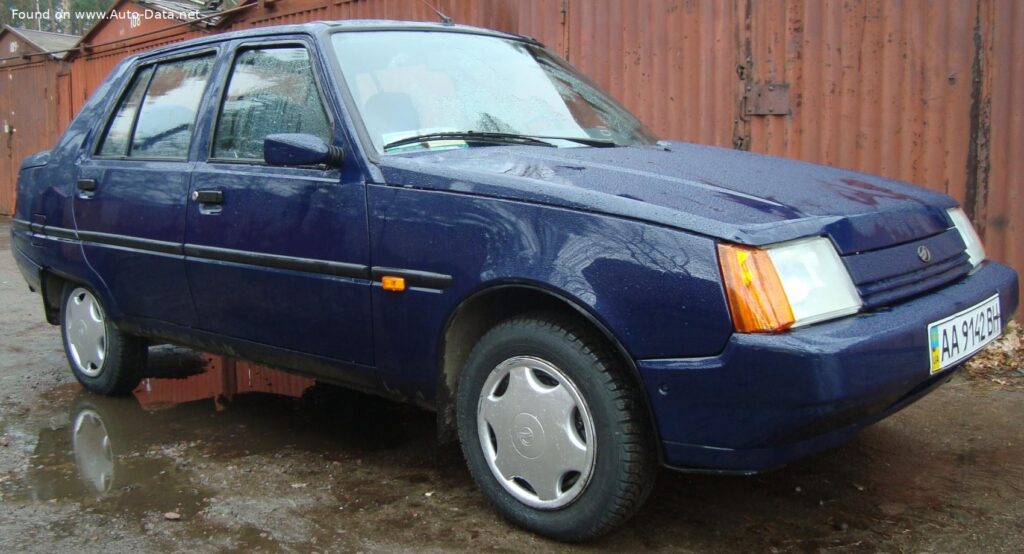
The ZAZ 1103, specifically the 1.2-liter (58 hp) variant, was a subcompact hatchback produced by the Ukrainian automobile manufacturer ZAZ (Zaporozhsky Avtomobilny Zavod) between 1999 and 2011. This model represented a significant evolution of the long-running ZAZ lineage, building upon the foundations laid by earlier Zaporozhets models but incorporating a more modern design and, crucially, a more contemporary powertrain. The 1.2L engine option positioned the 1103 as the entry-level offering within the range, aimed at budget-conscious buyers seeking affordable and practical transportation. It served as a direct replacement for older, less efficient models and became a common sight on Ukrainian roads for over a decade.
ZAZ 1103 1.2: An Overview
The ZAZ 1103 was designed as a five-door hatchback, offering seating for five passengers. It was intended to be a versatile vehicle suitable for both urban commuting and occasional longer journeys. The 1.2-liter engine variant was particularly popular due to its lower purchase price and relatively economical fuel consumption, making it an attractive option for first-time car owners and families on a tight budget. While not known for its performance, the 1103 1.2 provided reliable, if basic, transportation for a large segment of the Ukrainian population.
Positioning in the ZAZ Lineup
During its production run, the ZAZ 1103 was offered with a limited number of engine and transmission options. The 1.2-liter, 58 hp engine paired with a five-speed manual transmission was the base model. Higher trim levels featured a 1.5-liter engine offering increased power, though automatic transmission options were not widely available. The 1.2L model was therefore the most accessible and affordable variant, targeting buyers prioritizing economy and practicality over performance.
Powertrain & Engine Architecture
The heart of the ZAZ 1103 1.2 is a 1.2-liter (1197 cc) inline four-cylinder gasoline engine. This engine, designated as a naturally aspirated unit, produced 58 horsepower at 5300 rpm and 90 Nm (66.38 lb-ft) of torque at 3000 rpm. The engine featured a relatively low compression ratio of 9.5:1 and utilized a carburetor fuel injection system – a characteristic of its era and a cost-saving measure. The cylinder bore measured 72 mm (2.83 in) and the piston stroke 73.5 mm (2.89 in). The engine’s valvetrain consisted of two valves per cylinder (SOHC).
The engine was transversely mounted at the front of the vehicle, driving the front wheels. The 1103 utilized a five-speed manual transmission as standard. This transmission was chosen for its simplicity, reliability, and contribution to fuel efficiency. The gear ratios were optimized for everyday driving conditions, prioritizing acceleration in lower gears and fuel economy at highway speeds. The transmission was not known for its sporty feel, but it was durable and relatively easy to maintain.
Driving Characteristics
The ZAZ 1103 1.2 was not designed for spirited driving. Its 58 hp output and relatively high kerb weight of 790 kg (1741.65 lbs) resulted in modest acceleration. 0-100 km/h (0-62 mph) took approximately 17.4 seconds, and 0-60 mph was achieved in around 16.5 seconds. The top speed was limited to 147 km/h (91.34 mph). The engine’s torque delivery was relatively flat, providing adequate power for everyday driving situations, such as navigating city streets and climbing moderate hills. However, overtaking maneuvers required careful planning and often necessitated downshifting.
Compared to the 1.5-liter versions of the 1103, the 1.2-liter model felt noticeably slower and less responsive. The 1.5L engine offered a more substantial power boost, improving acceleration and providing a more relaxed driving experience, particularly when fully loaded or traveling on highways. However, the 1.2L’s lower running costs and simpler mechanics made it a popular choice for those prioritizing affordability.
Equipment & Trim Levels
The ZAZ 1103 1.2 was typically equipped with basic, functional features. Standard equipment included cloth upholstery, a simple dashboard layout, and manual windows and door locks. The interior was designed with practicality in mind, offering sufficient space for five passengers and a reasonable amount of cargo capacity. The trunk space ranged from 300 liters (10.59 cu. ft.) with the rear seats up to 740 liters (26.13 cu. ft.) with the rear seats folded down.
Optional extras were limited but could include features such as a radio/cassette player, upgraded seat upholstery, and power steering. Higher trim levels might have included additional cosmetic enhancements, such as body-colored bumpers and door handles. However, the 1.2-liter model generally remained a fairly basic vehicle, focusing on providing essential transportation at an affordable price.
Chassis & Braking
The ZAZ 1103 1.2 featured a relatively simple chassis design. The front suspension consisted of coil springs, while the rear suspension also utilized coil springs. The steering system was a rack and pinion type, providing reasonable steering precision. The braking system consisted of disc brakes on the front wheels and drum brakes on the rear wheels. An Anti-lock Braking System (ABS) was included as a standard safety feature.
The tires were typically 155/70 R13 in size. The suspension setup was tuned for comfort rather than sporty handling, providing a reasonably smooth ride on typical road surfaces. The braking performance was adequate for everyday driving, but the drum brakes on the rear wheels limited the overall stopping power.
Market Reception & Comparison
The ZAZ 1103 1.2 received mixed reviews from automotive critics. While praised for its affordability and practicality, it was often criticized for its lack of performance, basic interior, and somewhat dated design. However, it was generally recognized as a reliable and durable vehicle, particularly considering its low price point. Fuel economy was a strong point, with the 1.2-liter engine offering reasonable consumption figures for its class.
Compared to other vehicles in its price range, such as used foreign imports, the ZAZ 1103 1.2 offered the advantage of readily available spare parts and relatively low maintenance costs. However, it lacked the refinement and features of more modern vehicles. The 1.5-liter version of the 1103 offered a noticeable improvement in performance, but at a higher purchase price.
Technical Specifications
| Brand | ZAZ |
| Model | 1103 |
| Generation | 1103 |
| Type (Engine) | 1.2 (58 Hp) |
| Start of production | 1999 year |
| End of production | 2011 year |
| Powertrain Architecture | Internal Combustion engine |
| Body type | Hatchback |
| Seats | 5 |
| Doors | 5 |
| Fuel Type | Petrol (Gasoline) |
| Acceleration 0 – 100 km/h | 17.4 sec |
| Acceleration 0 – 62 mph | 17.4 sec |
| Acceleration 0 – 60 mph | 16.5 sec |
| Maximum speed | 147 km/h / 91.34 mph |
| Weight-to-power ratio | 13.6 kg/Hp |
| Weight-to-torque ratio | 8.8 kg/Nm |
| Power | 58 Hp @ 5300 rpm |
| Torque | 90 Nm @ 3000 rpm / 66.38 lb.-ft. @ 3000 rpm |
| Engine layout | Front, Transverse |
| Engine displacement | 1197 cm3 / 73.05 cu. in. |
| Number of cylinders | 4 |
| Engine configuration | Inline |
| Cylinder Bore | 72 mm / 2.83 in. |
| Piston Stroke | 73.5 mm / 2.89 in. |
| Compression ratio | 9.5:1 |
| Number of valves per cylinder | 2 |
| Fuel injection system | Carburettor |
| Engine aspiration | Naturally aspirated engine |
| Kerb Weight | 790 kg / 1741.65 lbs |
| Max. weight | 1190 kg / 2623.5 lbs |
| Max load | 400 kg / 881.85 lbs |
| Trunk (boot) space – minimum | 300 l / 10.59 cu. ft. |
| Trunk (boot) space – maximum | 740 l / 26.13 cu. ft. |
| Fuel tank capacity | 38 l / 10.04 US gal | 8.36 UK gal |
| Length | 3980 mm / 156.69 in. |
| Width | 1564 mm / 61.57 in. |
| Height | 1425 mm / 56.1 in. |
| Wheelbase | 2320 mm / 91.34 in. |
| Front track | 1314 mm / 51.73 in. |
| Rear (Back) track | 1305 mm / 51.38 in. |
| Drive wheel | Front wheel drive |
| Number of gears and type of gearbox | 5 gears, manual transmission |
Legacy
The ZAZ 1103 1.2, while not a groundbreaking vehicle, played an important role in providing affordable transportation to a large segment of the Ukrainian population. Its simple mechanics and readily available spare parts made it relatively easy to maintain, even in areas with limited access to specialized repair facilities. Today, the 1103 1.2 can be found on the used car market, typically at very low prices. While not highly sought after by collectors, it remains a recognizable and nostalgic vehicle for many Ukrainians. The powertrain, while dated, proved to be reasonably durable, and many examples are still in running condition despite their age. Its legacy lies in its affordability, practicality, and its contribution to the mobility of a nation.
