
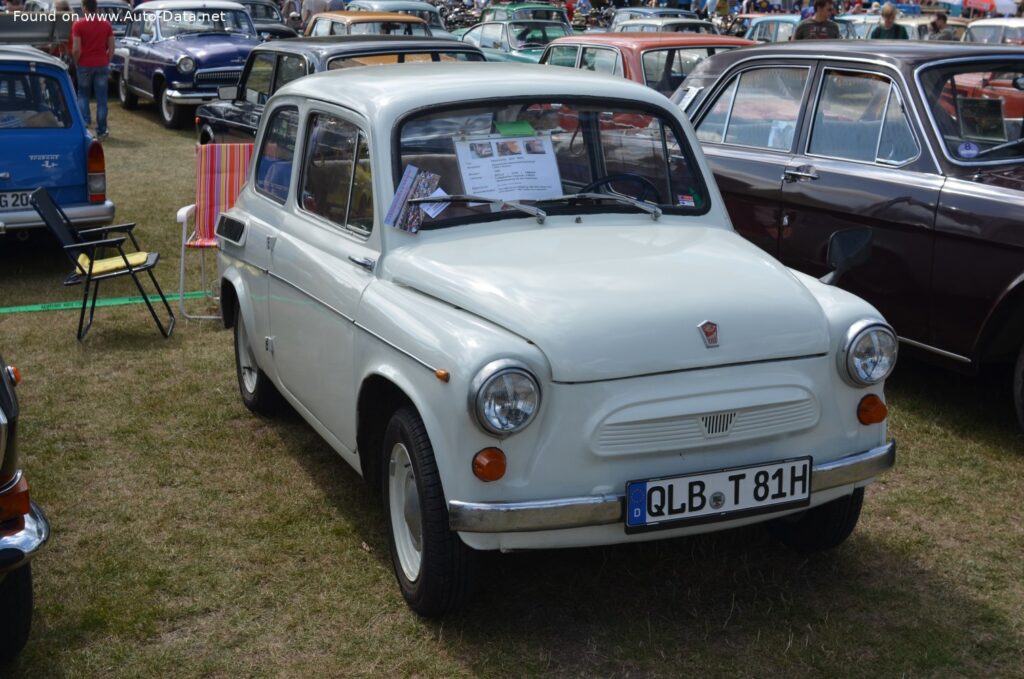
The ZAZ 965, specifically the 0.7-liter (23 hp) variant, was a pivotal model in the early history of the Ukrainian automotive industry. Produced from 1960 to 1963, this diminutive hatchback represented a significant step towards providing affordable personal transportation to the Soviet populace. It was the first model produced by the Zaporizhzhia Automobile Building Plant (ZAZ), and its design was heavily influenced by the Fiat 600, licensed for production in the Soviet Union. The 0.7L version served as the entry-level model within the initial 965 lineup, offering basic transportation at a time when car ownership was still a relative luxury.
ZAZ 965 0.7: A Foundation of Ukrainian Motoring
The ZAZ 965 was conceived as a response to the growing demand for small, economical cars in the Soviet Union. The decision to license the Fiat 600 design was driven by the need for a modern, efficient, and relatively inexpensive vehicle that could be mass-produced. The 0.7-liter engine variant was the standard offering for the first few years of production, establishing the 965 as a practical and accessible option for a broad segment of the population. It filled a niche for those seeking a step up from motorcycles or public transport, but who couldn’t afford larger or more luxurious vehicles.
Powertrain & Engine Architecture
The heart of the ZAZ 965 0.7 was a 746 cc (45.52 cu. in.) V4 engine, designated as the MeMZ-965. This engine, while small, was a relatively advanced design for its time, featuring a V-configuration to improve balance and reduce vibrations. It produced 23 horsepower at 4000 rpm and 45 Nm (33.19 lb-ft) of torque at 2200 rpm, giving it a power-to-liter ratio of 30.8 hp/l. The engine employed a carburetor fuel injection system, typical for vehicles of this era, and featured two valves per cylinder. The engine was longitudinally mounted at the rear of the vehicle, driving the rear wheels. The compression ratio was 6.5:1. The 965 utilized a four-speed manual transmission, which was considered standard for vehicles in this class during the early 1960s. The transmission was not synchronized on first gear.
Driving Characteristics
The ZAZ 965 0.7’s driving experience was defined by its modest power output and lightweight construction. With a top speed of approximately 90 km/h (55.92 mph), it was not designed for high-speed travel. Acceleration was slow, but adequate for navigating urban environments and rural roads. The rear-engine, rear-wheel-drive layout contributed to a distinctive handling characteristic, with a tendency towards oversteer, particularly on slippery surfaces. The four-speed manual transmission required frequent shifting to maintain optimal engine speed, and the lack of synchronization on first gear demanded a skilled driver for smooth starts. Compared to later, slightly more powerful versions of the 965, the 0.7L model felt noticeably less responsive, but its simplicity and low running costs were significant advantages.
Equipment & Trim Levels
The ZAZ 965 0.7 was characterized by its spartan, functional interior. Standard features were minimal, reflecting its position as an entry-level vehicle. The interior typically featured simple cloth upholstery, a basic dashboard with minimal instrumentation (speedometer, fuel gauge), and a three-spoke steering wheel. Heating was available, but air conditioning was not an option. The car featured two doors and seating for four passengers, although rear passenger space was limited. Optional extras were scarce, typically limited to a radio or upgraded interior trim. The focus was on providing basic, reliable transportation rather than luxury or comfort.
Chassis & Braking
The ZAZ 965 0.7 featured a body-on-frame construction, which was common for vehicles of this era. The front suspension utilized torsion bars, while the rear suspension employed coil springs. This suspension setup provided a reasonably comfortable ride, considering the vehicle’s small size and simple design. The braking system consisted of drum brakes on all four wheels. The steering system was a worm-reduction unit, which provided relatively heavy but precise steering feel. The car rode on 135/80 SR13 tires. The relatively simple chassis and braking systems were designed for ease of maintenance and repair, which was a crucial consideration in the Soviet Union.
Market Reception & Comparison
The ZAZ 965 0.7 was generally well-received in the Soviet Union, particularly due to its affordability and practicality. It filled a gap in the market for a small, economical car that was accessible to a wider range of consumers. Critics praised its fuel efficiency (5.5 l/100 km, or 42.8 US mpg) and relatively simple maintenance requirements. However, it was also criticized for its limited power, basic interior, and somewhat quirky handling characteristics. Compared to other vehicles available in the Soviet Union at the time, such as the Moskvich 408, the ZAZ 965 0.7 was smaller, more economical, and more affordable. Later versions of the 965, with larger engines and improved features, addressed some of the criticisms leveled at the original 0.7-liter model.
Technical Specifications
| Body Type | Hatchback, 2 Doors, 4 Seats |
| Engine Displacement | 0.7 l (746 cm3 / 45.52 cu. in.) |
| Engine Configuration | V4 |
| Number of Cylinders | 4 |
| Fuel Type | Petrol (Gasoline) |
| Maximum Power | 23 hp @ 4000 rpm |
| Maximum Torque | 45 Nm (33.19 lb-ft) @ 2200 rpm |
| Compression Ratio | 6.5:1 |
| Fuel Consumption (Combined) | 5.5 l/100 km (42.8 US mpg, 51.4 UK mpg, 18.2 km/l) |
| Maximum Speed | 90 km/h (55.92 mph) |
| Transmission | 4-speed Manual |
| Drive Type | Rear Wheel Drive |
| Length | 3330 mm (131.1 in) |
| Width | 1395 mm (54.92 in) |
| Height | 1450 mm (57.09 in) |
| Wheelbase | 2023 mm (79.65 in) |
| Fuel Tank Capacity | 30 l (7.93 US gal, 6.6 UK gal) |
| Tire Size | 135/80 SR13 |
Legacy
The ZAZ 965 0.7, while superseded by later models, holds a significant place in the history of Ukrainian automotive manufacturing. It laid the foundation for the development of the ZAZ brand and provided a crucial stepping stone towards greater domestic car production. Today, the 965 is a popular classic car among enthusiasts, particularly in Ukraine and other former Soviet republics. Its simple design, robust construction, and readily available spare parts make it relatively easy to maintain and restore. While not known for exceptional performance or luxury, the ZAZ 965 0.7 remains a beloved symbol of a bygone era, representing a time when car ownership was becoming increasingly accessible to the masses.
